

News Summary
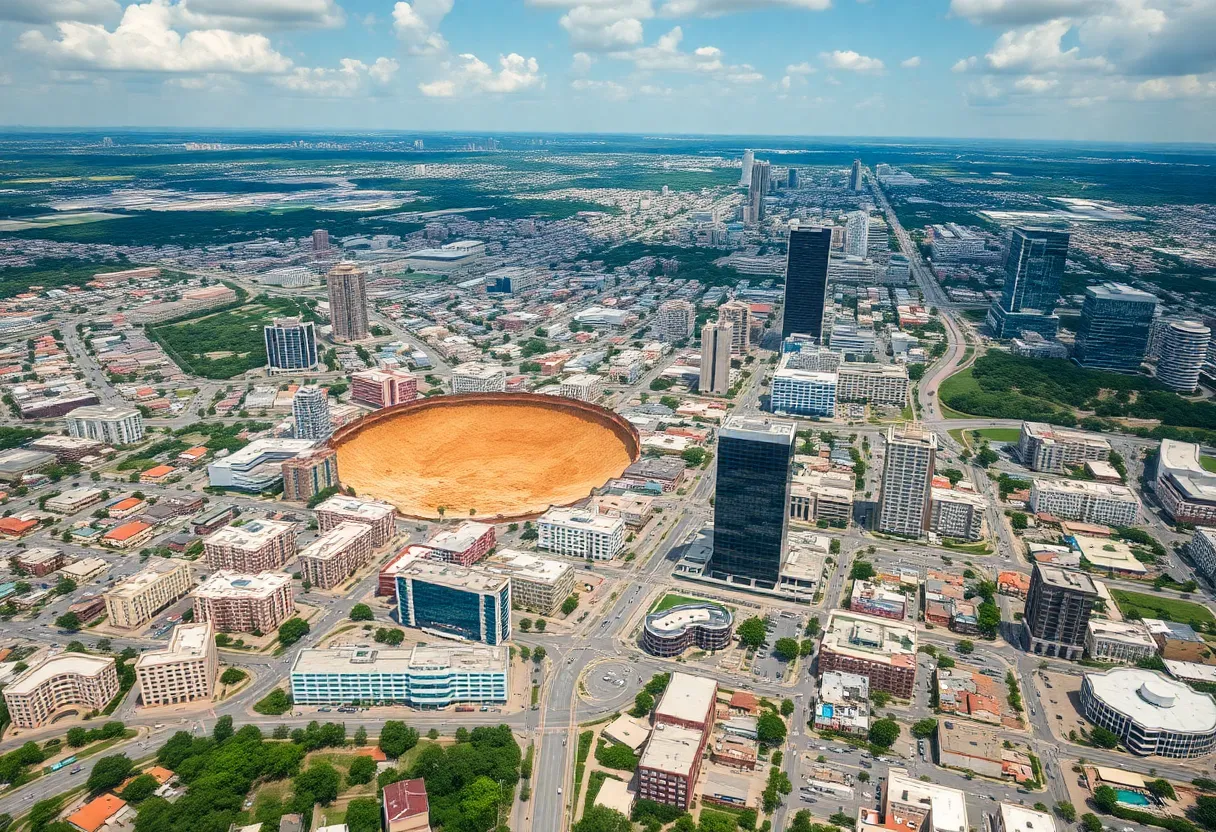
A new study reveals San Antonio has the highest number of buildings at risk from land subsidence in the U.S., with over 10,000 structures deemed at high risk. This alarming statistic sheds light on the dangers of differential land motion affecting urban infrastructure. Many residents live in sinking areas, prompting calls for improved groundwater management and infrastructural adaptation to mitigate future damage. The findings highlight the widespread challenge of land subsidence impacting inland cities, which has traditionally been viewed as a coastal issue.
San Antonio has emerged as the U.S. city with the highest number of buildings at risk from land subsidence, according to a new study. The research highlights that San Antonio houses a staggering 10,269 buildings deemed to be at “high” or “very high” risk, which is more than 6,000 more than any other metropolitan area analyzed in the study. Published in the journal Nature Cities on May 8, the findings demonstrate a concerning risk rate of 1 in every 45 buildings potentially facing damage primarily due to differential land motion.
The study sheds light on how risks associated with land subsidence can slowly compromise infrastructure over time, often only becoming apparent when severe damage occurs. These findings challenge the notion that land subsidence is a problem restricted to coastal areas, revealing that inland urban areas like San Antonio are equally affected.
Land Subsidence Risks
According to the study, all 28 major U.S. cities analyzed are experiencing some degree of sinking due to groundwater extraction, with at least 20% of their areas subsiding. Modest rates of land subsidence can significantly impact critical infrastructure, including buildings, roads, bridges, and dams. Notably, Texas cities are particularly vulnerable to this issue. Significant areas in Fort Worth, Dallas, and Houston are sinking at notable rates, with Houston identified as the fastest-sinking major U.S. city. In Houston, approximately 11.6% of its area is sinking at a rate of over 10 millimeters per year.
Implications for San Antonio
In San Antonio itself, around 1.05 million of the city’s approximately 1.5 million residents live in areas where the land is sinking. The overall sinking rate for San Antonio is estimated at about 1.1 millimeters per year. The implications of these findings suggest an immediate need for infrastructural adaptation. As the study indicates, while subsidence rates may be slow, the cumulative effects can lead to significant disruptions in infrastructure and heightened flooding risks.
Comparative Analysis
In addition to San Antonio, other cities such as Austin, Fort Worth, and Memphis also display substantial risks. Austin shows a high-risk rate of 1 in 71 buildings, Fort Worth has a rate of 1 in 143, and Memphis stands at 1 in 167. These figures underline the widespread challenge faced by many urban centers in dealing with the implications of land subsidence.
Call for Action
The researchers emphasize the critical importance of effective groundwater management to address subsidence-related issues. As urban development continues to evolve, the findings underscore an urgent need for cities to adapt their infrastructure strategies to ensure sustainable development in response to environmental pressures.
The study utilized land elevation changes and groundwater trends to provide insight into the dynamics of subsidence, further reinforcing the need for increased scrutiny and proactive measures in affected areas. As cities like San Antonio experience the silent risks posed by subsidence, the findings signal the necessity of a thorough evaluation and reformation of urban planning approaches to mitigate potential hazards as they arise.
Deeper Dive: News & Info About This Topic
HERE Resources
Additional Resources
- Express News: San Antonio Sinking
- Wikipedia: Land Subsidence
- Statesman: Houston and Texas Cities Sinking
- Google Search: San Antonio Sinking Land Subsidence
- New Atlas: 28 US Cities Sinking
- Google Scholar: Texas Land Subsidence Study
- Earth.com: U.S. Cities Sinking
- Encyclopedia Britannica: Land Subsidence
- Newsweek: Sinking Major Cities USA
- Google News: Land Subsidence Infrastructure Damage


Author: STAFF HERE SAN ANTONIO WRITER
The SAN ANTONIO STAFF WRITER represents the experienced team at HERESanAntonio.com, your go-to source for actionable local news and information in San Antonio, Bexar County, and beyond. Specializing in "news you can use," we cover essential topics like product reviews for personal and business needs, local business directories, politics, real estate trends, neighborhood insights, and state news affecting the area—with deep expertise drawn from years of dedicated reporting and strong community input, including local press releases and business updates. We deliver top reporting on high-value events such as Fiesta San Antonio, San Antonio Stock Show & Rodeo, and Dia de los Muertos. Our coverage extends to key organizations like the Greater San Antonio Chamber of Commerce and United Way of San Antonio and Bexar County, plus leading businesses in retail, insurance, and energy that power the local economy such as H-E-B, USAA, and Valero Energy. As part of the broader HERE network, including HEREAustinTX.com, HERECollegeStation.com, HEREDallas.com, and HEREHouston.com, we provide comprehensive, credible insights into Texas's dynamic landscape.