

News Summary
Texas state lawmakers are currently embroiled in a contentious redistricting process requested by former President Trump to reshape congressional maps ahead of the 2026 midterm elections. This unusual mid-decade effort has prompted concerns regarding political representation, with Democrats fearing loss in traditionally Democratic areas like San Antonio. Critics, including former Attorney General Eric Holder, warn of potential election manipulation and voter misrepresentation. As political tensions rise, transparency and public opposition become central themes in this vital legislative discussion.
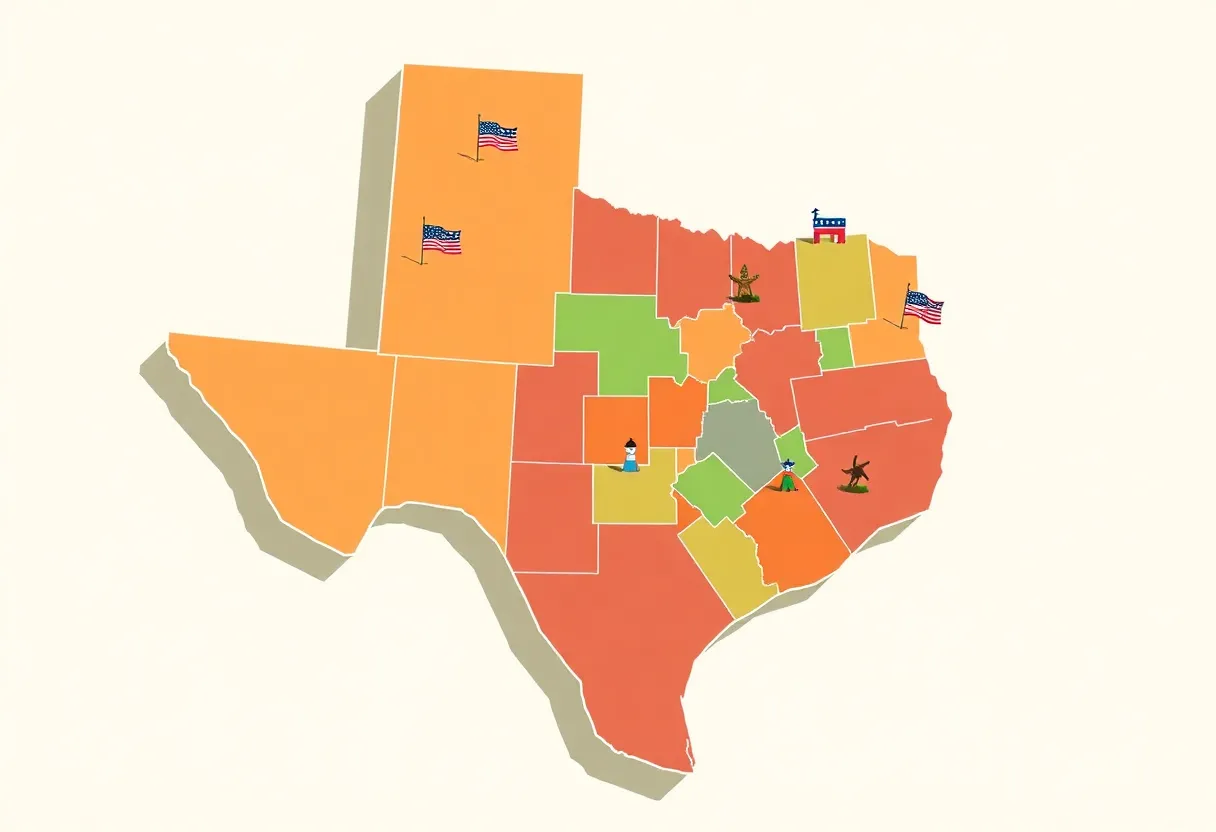
San Antonio, Texas – Texas state lawmakers are currently involved in a contentious redistricting process, initiated at the request of former President Donald Trump, that aims to reshape congressional maps ahead of the 2026 midterm elections. This effort, which occurs mid-decade, is unusual and has ignited widespread scrutiny and concern regarding its potential implications for political representation within the state.
Democrats and numerous political analysts have raised alarms about these redistricting efforts, asserting that they may result in a loss of representation in traditionally Democratic areas, such as San Antonio. Bexar County, which is home to five congressional representatives, currently includes two Republicans, Chip Roy and Tony Gonzales, alongside three Democrats: Greg Casar, Joaquin Castro, and Henry Cuellar.
Critics of the proposed changes, including former U.S. Attorney General Eric H. Holder, Jr., have characterized the redistricting as an attempt to “rig” elections and undermine democratic processes. Political science experts have warned that the modifications could lead to significant voter misrepresentation, allowing incumbents to draw favorable districts instead of empowering individuals to select their representatives.
Political Landscape and Current Representation
Republicans in Texas presently hold a substantial majority, claiming 25 out of the 38 congressional seats, despite having received only about 58% of the congressional votes in recent electoral contests. This stark discrepancy highlights the potential consequences of the ongoing redistricting efforts. Accusations have emerged that the Republican Party seeks to create racially discriminatory maps that would further skew representation in their favor amid ongoing legal challenges to existing district maps.
Democrats denounce the redistricting initiative as “political theft,” suggesting it represents a strategic maneuver to manipulate the electoral system as the Republican Party faces increasingly difficult prospects in fair contests. The situation is further complicated by the fact that these actions are taking place during a special legislative session primarily focused on disaster relief and recovery efforts for communities devastated by recent floods that claimed over 130 lives in Texas.
Concerns Over Transparency and Strategy
Amid the controversy, claims have surfaced that the new congressional maps have likely been drawn in secret, raising concerns about a lack of transparency in the redistricting process. Democratic lawmakers have expressed frustration over this opacity, which they believe inhibits open dialogue and input from constituents who will be affected by the changes. In response to these developments, some Texas Democratic representatives are contemplating employing legislative tactics, including breaking quorum, to obstruct the redistricting process and redirect legislative efforts toward addressing disaster recovery issues.
As political tensions escalate, Democrats are ramping up efforts to rally public opposition against the redistricting measures, framing them as a crucial threat to democratic principles and an abuse of power. Although Republicans are optimistic about their plans, there are concerns within their ranks that aggressive redistricting strategy might backfire, leading to unexpected losses if the new districts become overly competitive.
Conclusion
The redistricting process in Texas is more than just a legislative exercise; it reflects deep-seated political divisions and the fragility of representing diverse communities. As state lawmakers engage in this contentious debate, the implications of their decisions will resonate through the political landscape leading into the 2026 midterm elections. With competing narratives around voter representation, party advantage, and democratic integrity, the outcome of this redistricting effort is poised to significantly influence Texas’s political future.
Deeper Dive: News & Info About This Topic
HERE Resources
Texas Hill Country Community Fundraises $60 Million for Flood Relief
Severe Flooding in Texas Hill Country Leaves 24 Dead
Texas Legislature Faces Tension Over Flood Relief and Redistricting Priorities
Additional Resources
- Politico: Texas Redistricting
- Wikipedia: Redistricting in the United States
- New York Times: Texas Redistricting and Floods
- Google Search: Texas Redistricting 2025
- Bloomberg: Texas Redistricting Fight
- Google Scholar: Gerrymandering
- Lubbock Online: Texas House Redistricting Hearings
- Encyclopedia Britannica: Texas Politics
- The Guardian: Democrats vs Republicans Maps
- Google News: Texas Redistricting


Author: STAFF HERE SAN ANTONIO WRITER
The SAN ANTONIO STAFF WRITER represents the experienced team at HERESanAntonio.com, your go-to source for actionable local news and information in San Antonio, Bexar County, and beyond. Specializing in "news you can use," we cover essential topics like product reviews for personal and business needs, local business directories, politics, real estate trends, neighborhood insights, and state news affecting the area—with deep expertise drawn from years of dedicated reporting and strong community input, including local press releases and business updates. We deliver top reporting on high-value events such as Fiesta San Antonio, San Antonio Stock Show & Rodeo, and Dia de los Muertos. Our coverage extends to key organizations like the Greater San Antonio Chamber of Commerce and United Way of San Antonio and Bexar County, plus leading businesses in retail, insurance, and energy that power the local economy such as H-E-B, USAA, and Valero Energy. As part of the broader HERE network, including HEREAustinTX.com, HERECollegeStation.com, HEREDallas.com, and HEREHouston.com, we provide comprehensive, credible insights into Texas's dynamic landscape.