

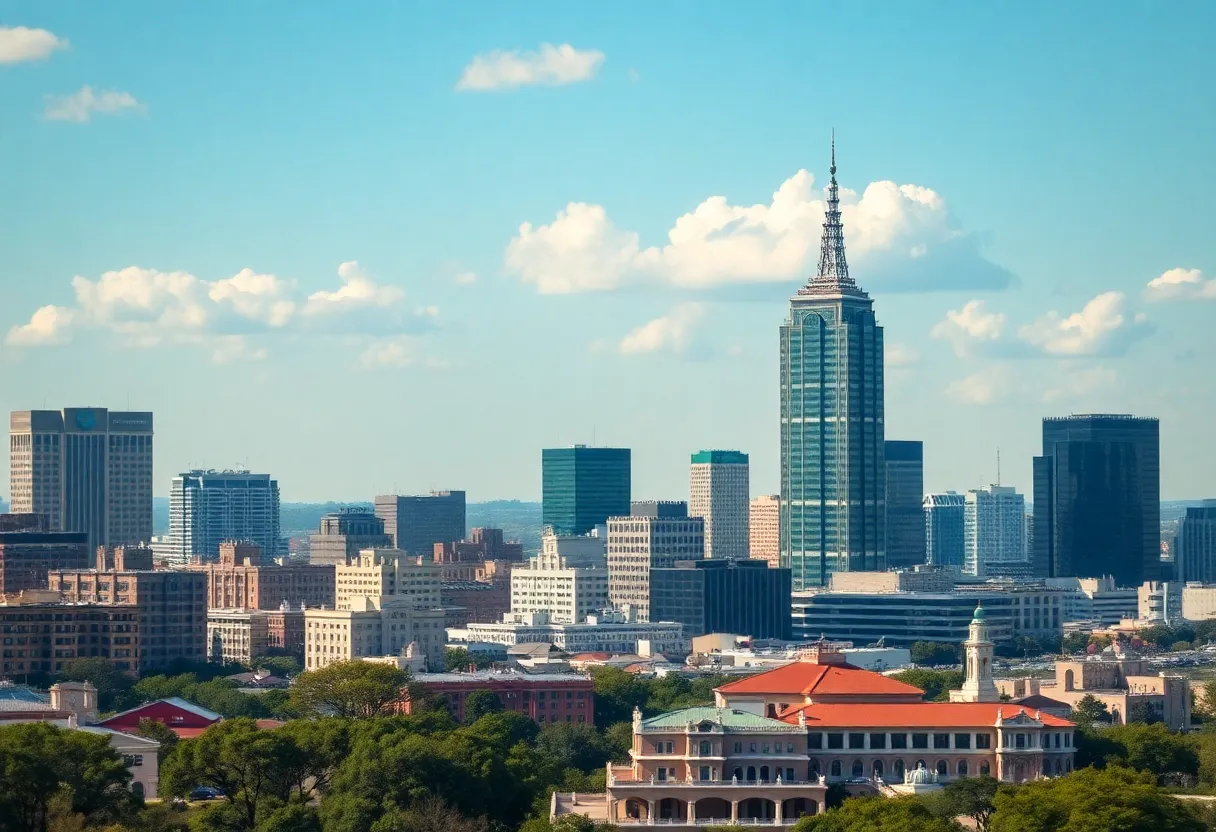
San Antonio, November 22, 2025
The loan market for Texas’ Main Street businesses is experiencing a notable transformation, with out-of-state lenders gaining a significant presence. This trend, marked by substantial financing figures from private money lenders, raises concerns about the implications for local economies and credit accessibility for smaller businesses. The increasing competition, especially in the commercial real estate sector, prompts a reevaluation of the role local financial institutions have historically played in supporting community growth amid growing competition from external sources.
Texas Loan Market Shifts: Out-of-State Lenders on the Rise
Concerns Grow for Local Businesses as Competition Intensifies
San Antonio, Texas – Recent developments indicate a significant shift in the loan market for Texas’ Main Street businesses, as out-of-state lenders gain a substantial foothold. This shift raises pertinent questions about the future of local economies and the accessibility of credit for smaller enterprises throughout the state.
In the fourth quarter of 2024, private money lenders financed an impressive $1.87 billion in loans across Texas, with the Dallas-Fort Worth area alone accounting for $956 million of that total. Among these lenders, Global Capital Funding, based outside Texas, has emerged as a prominent entity in the private lending arena, offering tailored financial solutions aimed at real estate investors. The expansion of such lenders may lead to an evolving landscape for business financing in Texas.
Out-of-State Lenders: A New Player in Commercial Real Estate
The growing presence of out-of-state lenders is particularly noticeable in the commercial real estate (CRE) sector. With foreclosures in this sector surging past $710 million in September 2025—especially impacting multifamily properties in key cities like Houston, Dallas, San Antonio, and Fort Worth—local stakeholders express concern. This trend prompts critical examination of how these developments might affect not just commercial ventures but also the local small-business ecosystem.
Local Financial Institutions: Historical Support for Businesses
The historical context of Texas’ lending landscape showcases a reliance on local banks that have significantly contributed to community growth. Established institutions such as Moody National Bank (founded in 1907) and Amarillo National Bank (established in 1892) have long provided essential financial services that cater to the unique needs of local businesses. The rise of out-of-state lenders may challenge the traditional role that these banks have played in fostering economic resilience in their communities.
Potential Impacts on Local Economies
The emergence of out-of-state lenders indicates potential shifts in the competitive landscape of business financing. Increased competition may influence the terms and availability of loans for Texas’ local businesses. While some argue that more options could drive innovation, others worry that the concentration of lending power could hinder the impact local banks have on community development and economic growth in their regions.
The Need for Adaptation and Innovation
To thrive amidst these changes, local financial institutions may need to adapt. This could entail leveraging new technologies, providing niche financial products, and forging stronger relationships with community stakeholders. As we move forward, a collaborative approach among policymakers, financial institutions, and business owners will be critical in meeting the evolving demands of Texas’ Main Street businesses.
Conclusion: Supporting Local Entrepreneurs
As the lending landscape transforms, Texas’ economy faces both challenges and opportunities. The increased competition from out-of-state lenders presents a vital moment for local banks and entrepreneurs to innovate and adapt. By rallying behind local businesses and reducing unnecessary regulatory burdens, we can collectively strive to ensure a robust future for the diversity of enterprises that define San Antonio and the broader Bexar County economy. Residents are encouraged to patronize local establishments and participate in community discussions about economic growth to shape the future of their neighborhoods.
Frequently Asked Questions (FAQ)
What is the current trend in Texas’ loan market?
Out-of-state lenders are increasingly dominating the loan market for Texas’ Main Street businesses, raising concerns about the impact on local economies and the availability of credit for small enterprises.
How much did private money lenders fund in Texas during the fourth quarter of 2024?
In the fourth quarter of 2024, private money lenders funded $1.87 billion in loans across Texas, with the Dallas-Fort Worth area accounting for $956 million of this total.
Which out-of-state lender has become significant in Texas’ private lending scene?
Global Capital Funding, a lender based outside Texas, has become a significant player in the state’s private lending scene, offering custom financial solutions for real estate investors.
What is the impact of out-of-state lenders on Texas’ local economies?
The dominance of out-of-state lenders could lead to increased competition, potentially affecting the terms and availability of loans for local businesses. Additionally, the concentration of lending power outside the state may limit the ability of local banks to support community development and growth.
Can you provide examples of prominent banks in Texas?
Historically, Texas has been home to several prominent banks that have played a crucial role in supporting local businesses. For instance, Moody National Bank, founded in 1907, has been a significant financial institution in Southeast and Central Texas. Similarly, Amarillo National Bank, established in 1892, has been a key player in the Texas Panhandle, offering a range of financial services to the community.
FAQ Schema in JSON-LD Format
{
  "@context": "https://schema.org",
  "@type": "FAQPage",
  "mainEntity": [
    {
      "@type": "Question",
      "name": "What is the current trend in Texas' loan market?",
      "acceptedAnswer": {
        "@type": "Answer",
        "text": "Out-of-state lenders are increasingly dominating the loan market for Texas' Main Street businesses, raising concerns about the impact on local economies and the availability of credit for small enterprises."
      }
    },
    {
      "@type": "Question",
      "name": "How much did private money lenders fund in Texas during the fourth quarter of 2024?",
      "acceptedAnswer": {
        "@type": "Answer",
        "text": "In the fourth quarter of 2024, private money lenders funded $1.87 billion in loans across Texas, with the Dallas-Fort Worth area accounting for $956 million of this total."
      }
    },
    {
      "@type": "Question",
      "name": "Which out-of-state lender has become significant in Texas' private lending scene?",
      "acceptedAnswer": {
        "@type": "Answer",
        "text": "Global Capital Funding, a lender based outside Texas, has become a significant player in the state's private lending scene, offering custom financial solutions for real estate investors."
      }
    },
    {
      "@type": "Question",
      "name": "What is the impact of out-of-state lenders on Texas' local economies?",
      "acceptedAnswer": {
        "@type": "Answer",
        "text": "The dominance of out-of-state lenders could lead to increased competition, potentially affecting the terms and availability of loans for local businesses. Additionally, the concentration of lending power outside the state may limit the ability of local banks to support community development and growth."
      }
    },
    {
      "@type": "Question",
      "name": "Can you provide examples of prominent banks in Texas?",
      "acceptedAnswer": {
        "@type": "Answer",
        "text": "Historically, Texas has been home to several prominent banks that have played a crucial role in supporting local businesses. For instance, Moody National Bank, founded in 1907, has been a significant financial institution in Southeast and Central Texas. Similarly, Amarillo National Bank, established in 1892, has been a key player in the Texas Panhandle, offering a range of financial services to the community."
      }
    }
  ]
}
Key Features of the Article
| Feature | Description |
|---|---|
| Current Trend | Out-of-state lenders increasingly dominating Texas’ Main Street loan market. |
| Funding Data | Private money lenders funded $1.87 billion in Texas during Q4 2024; Dallas-Fort Worth area accounted for $956 million. |
| Significant Lender | Global Capital Funding, an out-of-state lender, has become a significant player in Texas’ private lending scene. |
| Impact on Local Economies | Potential increased competition affecting loan terms and availability; concentration of lending power may limit local banks’ support for community development. |
| Historical Context | Examples of prominent Texas banks: Moody National Bank (founded in 1907) and Amarillo National Bank (established in 1892). |
Deeper Dive: News & Info About This Topic
HERE Resources
Real Estate Market in San Antonio Faces Challenges Amid Shutdown
Texas Advances in Lithium Production
Texas Capital Bancshares Reports Strong Third Quarter Earnings
Heavy Rain and Flooding Risks Loom in Texas
Investor Confidence Returns in Dallas Banking Sector
Texas Small Businesses Get a Boost with New Grant Opportunities
Huntington Bancshares Merges with Veritex Holdings
New Legislative Boost for Small Businesses in Texas
Joint Venture Acquires Northwoods Shopping Center in San Antonio
Base Power Raises $1 Billion for Texas Grid Renovation

Author: STAFF HERE SAN ANTONIO WRITER
The SAN ANTONIO STAFF WRITER represents the experienced team at HERESanAntonio.com, your go-to source for actionable local news and information in San Antonio, Bexar County, and beyond. Specializing in "news you can use," we cover essential topics like product reviews for personal and business needs, local business directories, politics, real estate trends, neighborhood insights, and state news affecting the area—with deep expertise drawn from years of dedicated reporting and strong community input, including local press releases and business updates. We deliver top reporting on high-value events such as Fiesta San Antonio, San Antonio Stock Show & Rodeo, and Dia de los Muertos. Our coverage extends to key organizations like the Greater San Antonio Chamber of Commerce and United Way of San Antonio and Bexar County, plus leading businesses in retail, insurance, and energy that power the local economy such as H-E-B, USAA, and Valero Energy. As part of the broader HERE network, including HEREAustinTX.com, HERECollegeStation.com, HEREDallas.com, and HEREHouston.com, we provide comprehensive, credible insights into Texas's dynamic landscape.