
News Summary
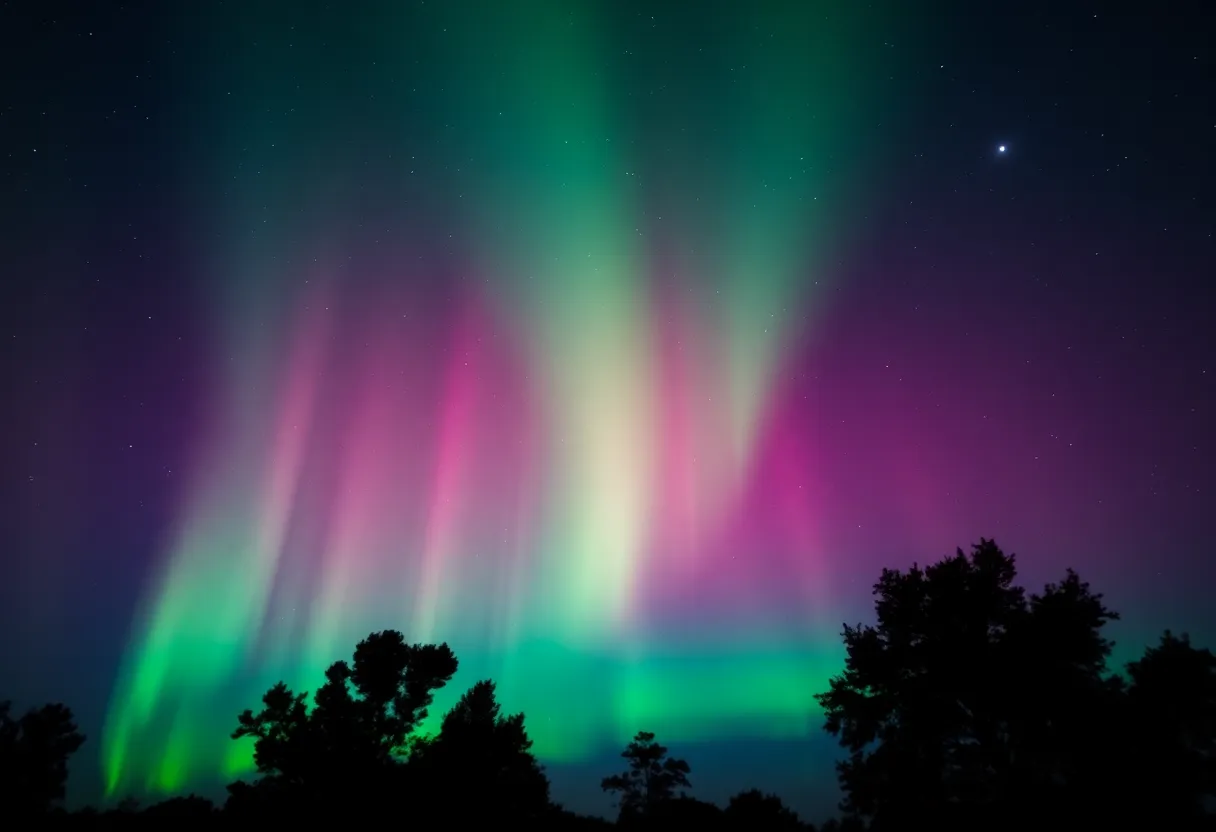
A severe geomagnetic storm, classified as G4, is expected to allow sightings of the northern lights in northern Texas. Cities like Austin and San Antonio have better chances for visibility, while Houston residents may need to use cameras for a glimpse. This event is part of ongoing geomagnetic disturbances triggered by recent solar activity, with optimal viewing conditions anticipated. Residents should seek dark areas away from urban light to enhance their viewing experience of this extraordinary astronomical phenomenon.
Fort Worth, Texas – A severe geomagnetic storm, classified as G4, is expected to bring the possibility of aurora borealis sightings to parts of northern Texas this evening. Urban areas such as Austin and San Antonio may experience visibility, while those in Houston might need to rely on camera lenses to capture the phenomenon, as direct visibility may be limited. This rare opportunity to witness the northern lights is part of an ongoing series of geomagnetic disturbances that began on June 1.
The National Oceanic and Atmospheric Administration’s (NOAA) Space Weather Prediction Center has indicated that previous geomagnetic events have allowed auroras to be seen as far south as the Gulf Coast. Although this storm is one of the strongest since early May of 2024, which previously allowed visibility down to South Texas, the latest event is not expected to be quite as intense.
Visibility of the auroras can be unpredictable; sometimes they are seen much farther south than originally forecasted, while at other times conditions fail to align for a sighting. Optimal viewing conditions are anticipated to remain into June 2, as the geomagnetic disturbances are ongoing. These disturbances are triggered by a Coronal Mass Ejection (CME) that impacted Earth on June 1, with another CME expected to arrive late on June 2. Furthermore, a smaller CME is predicted on June 3-4, potentially prolonging the effects of the storm.
The solar storm from June 1 was significant, traveling at a speed of about 1,938 km/s (approximately 4.3 million mph) and carrying material from multiple CMEs. Auroras result from interactions between electrically charged particles from space and the Earth’s atmospheric gases, generally oxygen and nitrogen, creating colorful light displays. Depending on factors like altitude and atmospheric conditions, these displays can appear in various colors, including green, red, blue, and pink.
The prime time to view the auroras is usually within one to two hours of midnight. As geomagnetic activity increases, the opportunity for sightings expands toward evening and morning. Those eager to catch a glimpse of the northern lights are advised to seek dark areas away from city lights, enhancing their chances of a successful viewing experience. For individuals in regions with limited visibility, utilizing a long exposure setting on cameras could improve the chances of capturing this extraordinary event.
The northern lights phenomenon is closely linked to solar cycles, which can peak and lead to heightened solar activity. Historical data shows that during extreme geomagnetic events, the auroras have been visible even as far south as Mexico City. While the Space Weather Prediction Center warns of minor technological disruptions potentially caused by the storm, no significant impacts are expected beyond the auroras themselves.
As June progresses, Texas residents interested in experiencing this captivating natural display should prepare for a night of skywatching. Regardless of whether the lights can be seen directly or only through camera lenses, the event represents a remarkable opportunity within the realm of space weather.
Deeper Dive: News & Info About This Topic
HERE Resources
Geomagnetic Activity Expected to Reveal Northern Lights in Texas
Geomagnetic Storms Illuminate the Sky with Northern Lights
Coronal Mass Ejection to Illuminate Northern Lights This Weekend
Additional Resources
- Austin American-Statesman
- Wikipedia: Geomagnetic storm
- KSAT San Antonio
- Google Search: Northern Lights Texas 2025
- Washington Post Weather
- Google Scholar: Northern Lights
- FOX Weather
- Encyclopedia Britannica: Northern Lights
- WFAA
- Google News: Northern Lights 2025


Author: STAFF HERE SAN ANTONIO WRITER
The SAN ANTONIO STAFF WRITER represents the experienced team at HERESanAntonio.com, your go-to source for actionable local news and information in San Antonio, Bexar County, and beyond. Specializing in "news you can use," we cover essential topics like product reviews for personal and business needs, local business directories, politics, real estate trends, neighborhood insights, and state news affecting the area—with deep expertise drawn from years of dedicated reporting and strong community input, including local press releases and business updates. We deliver top reporting on high-value events such as Fiesta San Antonio, San Antonio Stock Show & Rodeo, and Dia de los Muertos. Our coverage extends to key organizations like the Greater San Antonio Chamber of Commerce and United Way of San Antonio and Bexar County, plus leading businesses in retail, insurance, and energy that power the local economy such as H-E-B, USAA, and Valero Energy. As part of the broader HERE network, including HEREAustinTX.com, HERECollegeStation.com, HEREDallas.com, and HEREHouston.com, we provide comprehensive, credible insights into Texas's dynamic landscape.