
San Antonio, TX, October 10, 2025
News Summary
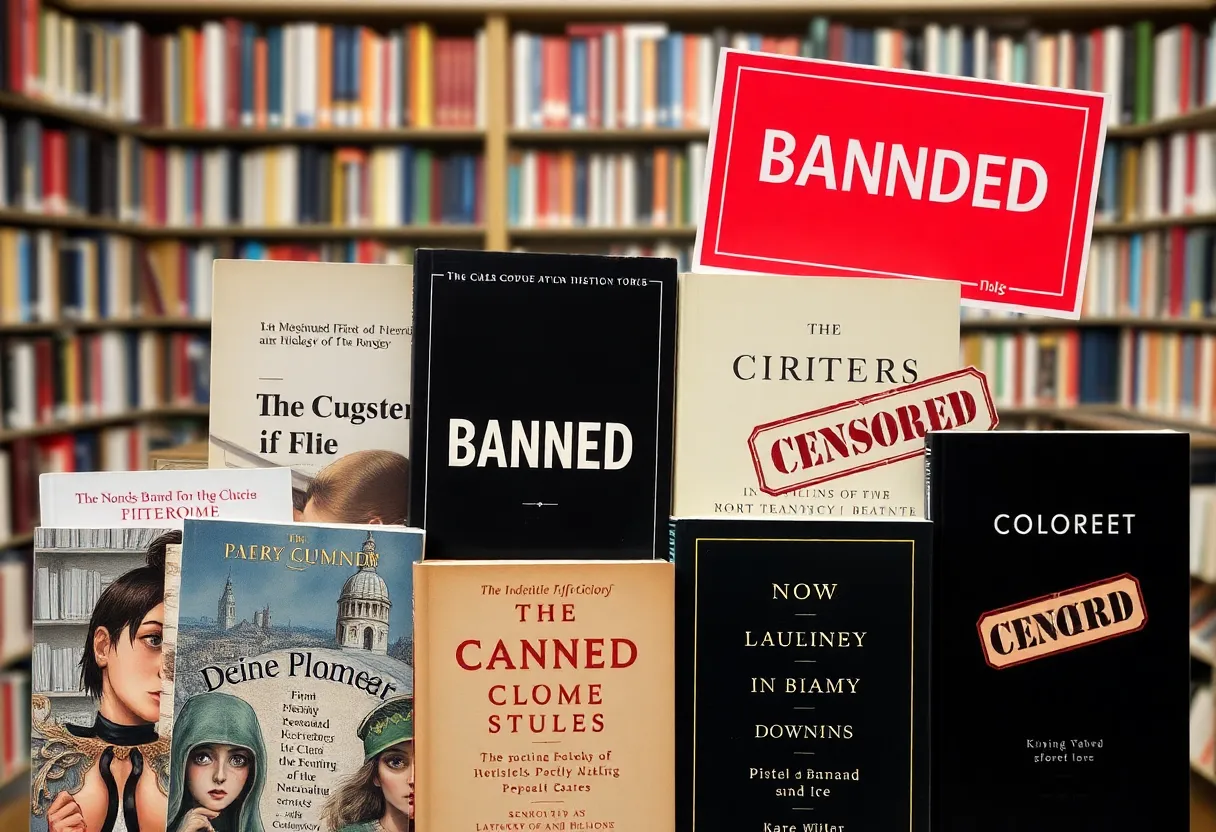
A significant rise in book bans is changing library collections and educational policies in Texas. As nearly 16,000 book bans have occurred nationwide since 2021, Texas has seen the introduction of new legislation impacting the decision-making power in schools and libraries. With the majority of challenges driven by external groups, the dynamics of public discourse around what children can read is evolving, raising concerns over censorship and intellectual freedom. The effects are felt across communities, igniting debates about personal responsibility versus public policy in education.
San Antonio — A surge in book bans is reshaping library collections and school policy in Texas and nationally, prompting debate about who decides what children can read and how public education responds.
Top lines
Since 2021, there have been nearly 16,000 book bans in public schools across the U.S., a figure reminiscent of the McCarthy era of the 1950s. At the state level, Texas ranks high for book bans, with Governor Greg Abbott signing Senate Bill 13 aimed at reinforcing local community values in school library collections. This legislation demands the removal of materials deemed offensive based on sexual or excretory content. Officials say the law also requires posting library titles for community review: The law requires all library books to be publicly listed for 30 days before school board approval, shifting the decision-making power from librarians to boards increasingly fearful of backlash.
Key developments and immediate impacts
By 2025 the state-level reporting shows concrete effects: In 2025, Texas was reported to have 1,738 banned books across just seven districts, while a broader trend indicates systemic censorship challenges in public education. Observers report that decisions increasingly move from trained librarians to elected school boards, and that many librarians engage in self-censorship to avoid controversy. Concerns are raised about the chilling effect of self-censorship among librarians who may avoid controversial titles altogether due to fear of repercussions.
What drives challenges to books
Data show that the majority of censorship attempts are not initiated by broad parent movements. In 2021-22, 72% of book censorship attempts were driven by external pressure groups rather than parents, with many challenges originating from a small number of individuals. Critics of current laws argue that bills with vague language expand the kinds of material that can be removed or restricted. Recent bills, House Bill 3225 and Senate Bill 13, threaten intellectual freedom by imposing strict regulations on library access for minors and expanding subjective definitions of “sexually explicit” material.
Cultural context and local echoes
The debate in Texas has been framed in cultural terms by some commentators. The column encourages readers to reflect on the film “Field of Dreams” in light of pervasive book bans in contemporary society. In that narrative-focused context, the protagonist, played by Kevin Costner, is urged by a voice to build a baseball field, paralleling the desire for community engagement in San Antonio’s new Missions stadium. The cultural discussion also draws attention to historical parallels: Historical context reveals a San Antonio incident in 1953 where a local official called for the labeling and burning of books deemed communist, resisted by the chief librarian Julia Grothaus.
Examples cited in public debate
Public controversy has included challenges to widely taught works. The narrative highlights subplots from “Field of Dreams” regarding book bans, where a mother claims that books such as “The Wizard of Oz” and “The Diary of Anne Frank” are inappropriate for schools. Those examples are used to illustrate how debates sometimes reach canonical texts historically included in school curricula.
National observances and reading trends
Awareness activities have coincided with these developments. Banned Books Week, observed from October 5-11, 2023, emphasizes the theme “Censorship Is So 1984.” Separate national trend data show shifts in reading habits: A decrease from 28% to 16% in Americans aged 15 and up reading books for pleasure daily has been noted since 2003. Observers link both the rise in bans and the decline in daily reading to broader cultural and policy changes affecting access and incentives to read.
Why officials say changes were made
Supporters of recent laws characterize them as returning control to local communities and reflecting local values. At the same time, critics assert those changes limit intellectual freedom and create barriers for students seeking diverse perspectives. The policy changes and legislative actions in Texas are part of a wider national pattern of challenges and restrictions in public education and libraries.
What to watch next
Advocates and school officials will likely contest how definitions are applied, how school boards manage review periods, and how librarians respond. The need for a robust defense of public education principles and the freedom to read is increasingly emphasized amid these censorship trends. Monitoring will focus on how districts implement public listing requirements, how many districts report new bans, and whether self-censorship increases among library staff.
Key features
| Feature | Detail |
|---|---|
| Nationwide bans since 2021 | Since 2021, there have been nearly 16,000 book bans in public schools across the U.S., a figure reminiscent of the McCarthy era of the 1950s. |
| Texas legislation | Texas ranks high for book bans, with Governor Greg Abbott signing Senate Bill 13 aimed at reinforcing local community values in school library collections. |
| Specific legal requirement | The law requires all library books to be publicly listed for 30 days before school board approval, shifting the decision-making power from librarians to boards increasingly fearful of backlash. |
| Reported 2025 Texas bans | In 2025, Texas was reported to have 1,738 banned books across just seven districts, while a broader trend indicates systemic censorship challenges in public education. |
Timeline
| Date / Time | Event | Status / Source |
|---|---|---|
| 1953 | Historical San Antonio incident: call to label and burn books deemed communist; chief librarian Julia Grothaus resisted | Historical record |
| 2003 → Present | A decrease from 28% to 16% in Americans aged 15 and up reading books for pleasure daily has been noted since 2003. | National reading trend data |
| Since 2021 | Since 2021, there have been nearly 16,000 book bans in public schools across the U.S., a figure reminiscent of the McCarthy era of the 1950s. | Nationwide reporting |
| 2021-22 | In 2021-22, 72% of book censorship attempts were driven by external pressure groups rather than parents, with many challenges originating from a small number of individuals. | Survey/analysis |
| October 5-11, 2023 | Banned Books Week, observed from October 5-11, 2023, emphasizes the theme “Censorship Is So 1984.” | Awareness event |
| 2025 | In 2025, Texas was reported to have 1,738 banned books across just seven districts, while a broader trend indicates systemic censorship challenges in public education. | State report |
Simple visual statistics
Nationwide book bans since 2021 (relative):
Reported Texas bans in 2025 (relative to nationwide):
Daily reading decline since 2003:
Frequently Asked Questions
How many book bans have occurred nationwide since 2021?
What has Texas done legislatively on school library materials?
Are there specific legal requirements for school libraries in Texas?
What was reported about banned books in Texas in 2025?
Who initiated most censorship attempts in 2021-22?
When was Banned Books Week observed in 2023 and what was its theme?
Deeper Dive: News & Info About This Topic
HERE Resources
New Restaurant to Open Near University in San Antonio
San Antonio Library Reaches 9 Million Checkouts in 2024
Additional Resources
- San Antonio Current: Bad Takes
- Wikipedia: Book Censorship in the United States
- Fox San Antonio: Appeals Court Decision
- Google Search: Texas Library Book Removal
- Express News: Texas Book Ban Law
- Google Scholar: Texas Book Ban Law
- Dallas Observer: List of Texas Banned Books
- Encyclopedia Britannica: Book Bans in Texas
- KENS5: Banned Books Week
- Google News: Banned Books Week


Author: STAFF HERE SAN ANTONIO WRITER
The SAN ANTONIO STAFF WRITER represents the experienced team at HERESanAntonio.com, your go-to source for actionable local news and information in San Antonio, Bexar County, and beyond. Specializing in "news you can use," we cover essential topics like product reviews for personal and business needs, local business directories, politics, real estate trends, neighborhood insights, and state news affecting the area—with deep expertise drawn from years of dedicated reporting and strong community input, including local press releases and business updates. We deliver top reporting on high-value events such as Fiesta San Antonio, San Antonio Stock Show & Rodeo, and Dia de los Muertos. Our coverage extends to key organizations like the Greater San Antonio Chamber of Commerce and United Way of San Antonio and Bexar County, plus leading businesses in retail, insurance, and energy that power the local economy such as H-E-B, USAA, and Valero Energy. As part of the broader HERE network, including HEREAustinTX.com, HERECollegeStation.com, HEREDallas.com, and HEREHouston.com, we provide comprehensive, credible insights into Texas's dynamic landscape.