

News Summary
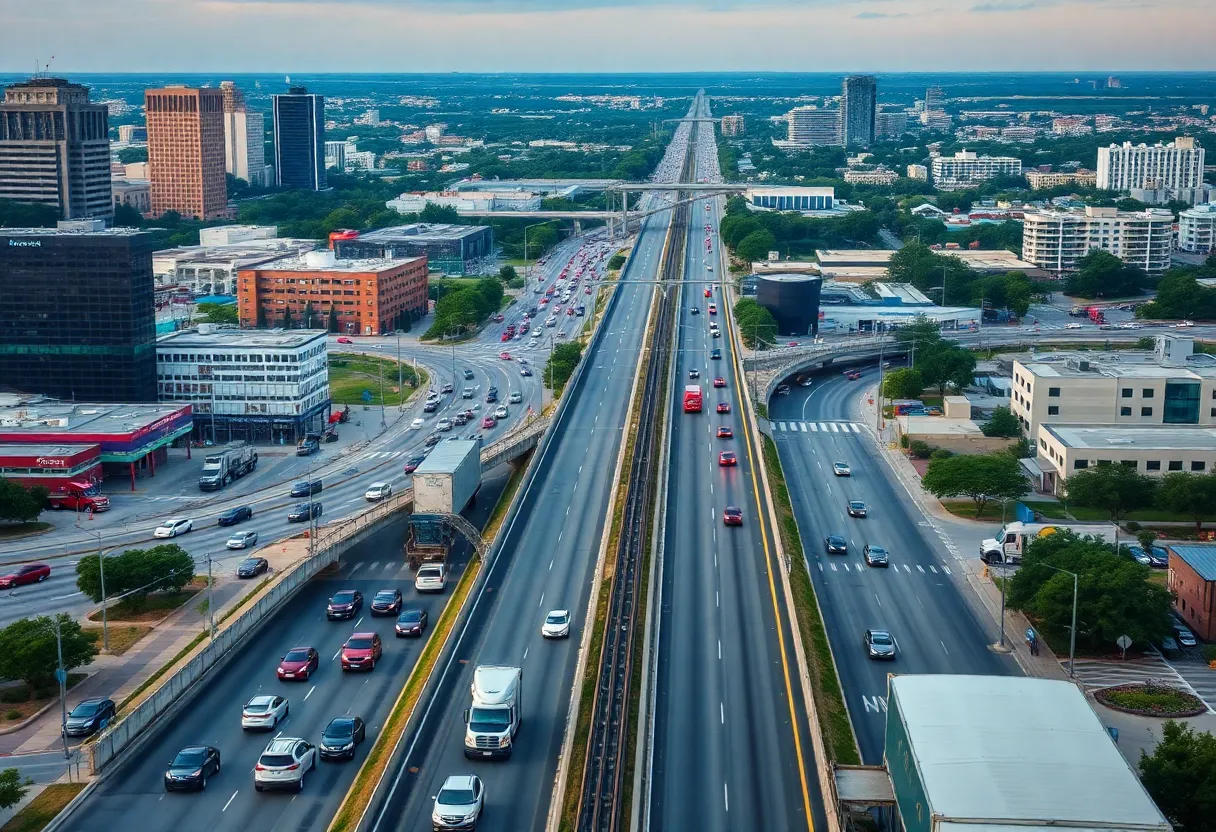
Central Texas is experiencing significant infrastructure challenges due to rapid population growth, particularly between Austin and San Antonio. The population has surged by over 563,000, putting pressure on essential systems like transportation and water supply. Cities like Cedar Park have seen dramatic increases in residents, highlighting the need for urgent upgrades. Traffic congestion on Interstate 35 and water supply issues, particularly concerning the Edwards Aquifer, are escalating concerns. Proposed solutions, such as a high-speed rail line, and investments by local governments aim to address these critical challenges as the region develops.
Central Texas is currently grappling with significant infrastructure challenges as the region between Austin and San Antonio undergoes rapid population growth, transforming into a sprawling metropolitan area. Recent data indicates that Texas’s overall population surged by nearly 563,000 between July 2023 and July 2024. This population boom, reflective of a broader trend in the state, is putting pressure on essential infrastructure systems in Central Texas.
One notable example of this growth is Cedar Park, a town that has gone from a modest 5,000 residents in 1990 to over 77,000 today. Such significant demographic shifts necessitate immediate and extensive upgrades to transportation, water supply, and other critical infrastructure, which are increasingly falling short of the rising demand.
Infrastructure deficiencies in Texas are evident, particularly concerning traffic congestion and water availability. The Edwards Aquifer is at its lowest levels since 1990, raising concerns about water supply sustainability. Traffic congestion is particularly challenging on Interstate 35, where travel times between Austin and San Antonio have more than doubled compared to a decade ago, complicating commuting for thousands of residents.
A proposed high-speed rail line between Austin and San Antonio may provide a long-term solution to the traffic dilemma, although funding from federal sources remains uncertain. Meanwhile, local governments are benefiting from the growth, enabling record levels of investment in infrastructure enhancements.
According to the 2025 Texas Infrastructure Report Card, the state faces critical concerns across various infrastructure categories, with a particularly low GPA indicating substantial room for improvement. Issues include the current condition of levees, which pose risks to 1.5 million residents and $248 billion in property, especially in light of adverse weather conditions such as hurricanes and floods. The report also highlights that Texas ports are struggling with increased ship sizes and operational costs, earning a grade of C+.
The management of stormwater infrastructure is under significant strain due to heavy rainfall and flooding risks, which contributed to a grade of C- for this critical system. The energy sector is also under siege from regulatory and market challenges, receiving a grade of C. Compounding these infrastructure issues is the digital divide affecting nearly a quarter of the population in rural areas of Texas, which has resulted in a low grade of D+ for broadband access.
The growth of Texas’s economy, now larger than that of Canada and only trailing behind California, serves as both a boon and a challenge. While the economic expansion presents opportunities, it also intensifies the demand for increased funding, better planning, and collaborative efforts between public and private sectors to adequately address the burgeoning infrastructure needs stemming from the rapid population increase.
As Central Texas continues to evolve into a more densely populated area, the urgency to improve various infrastructure systems will only grow. The challenges posed by this rapid transformation require not only immediate action but also long-term strategies to ensure that the region’s infrastructure can support its expanding population and maintain the quality of life for its residents.
Deeper Dive: News & Info About This Topic
HERE Resources
Dallas High-Speed Rail Project Faces Hurdles After Renfe Exit
San Antonio Braces for Hazardous Weather from Saharan Dust
San Antonio Launches Community Forums for Project Marvel
San Antonio’s New Leadership: University District Aligns with Councilwoman
San Antonio Faces Tragedy Following Severe Storms and Flooding
Severe Storms Devastate San Antonio, Resulting in Tragedy
Severe Flash Flooding Hits San Antonio, Four Dead
San Antonio Prepares for Tubing Season Amid Drought Challenges
San Antonio Faces Severe Thunderstorms and Flash Flooding
Flash Flooding Disrupts San Antonio Commute
Additional Resources
- KHOU Texas Infrastructure Report
- Wikipedia: Infrastructure in the United States
- Community Impact News
- Google Search: Central Texas infrastructure growth
- The Daily Toreador
- Google Scholar: Texas water infrastructure
- Pensions & Investments
- Encyclopedia Britannica: Texas economy and population growth
- Austin American-Statesman
- Google News: Texas infrastructure development


Author: STAFF HERE SAN ANTONIO WRITER
The SAN ANTONIO STAFF WRITER represents the experienced team at HERESanAntonio.com, your go-to source for actionable local news and information in San Antonio, Bexar County, and beyond. Specializing in "news you can use," we cover essential topics like product reviews for personal and business needs, local business directories, politics, real estate trends, neighborhood insights, and state news affecting the area—with deep expertise drawn from years of dedicated reporting and strong community input, including local press releases and business updates. We deliver top reporting on high-value events such as Fiesta San Antonio, San Antonio Stock Show & Rodeo, and Dia de los Muertos. Our coverage extends to key organizations like the Greater San Antonio Chamber of Commerce and United Way of San Antonio and Bexar County, plus leading businesses in retail, insurance, and energy that power the local economy such as H-E-B, USAA, and Valero Energy. As part of the broader HERE network, including HEREAustinTX.com, HERECollegeStation.com, HEREDallas.com, and HEREHouston.com, we provide comprehensive, credible insights into Texas's dynamic landscape.