
San Antonio, Texas, January 26, 2026
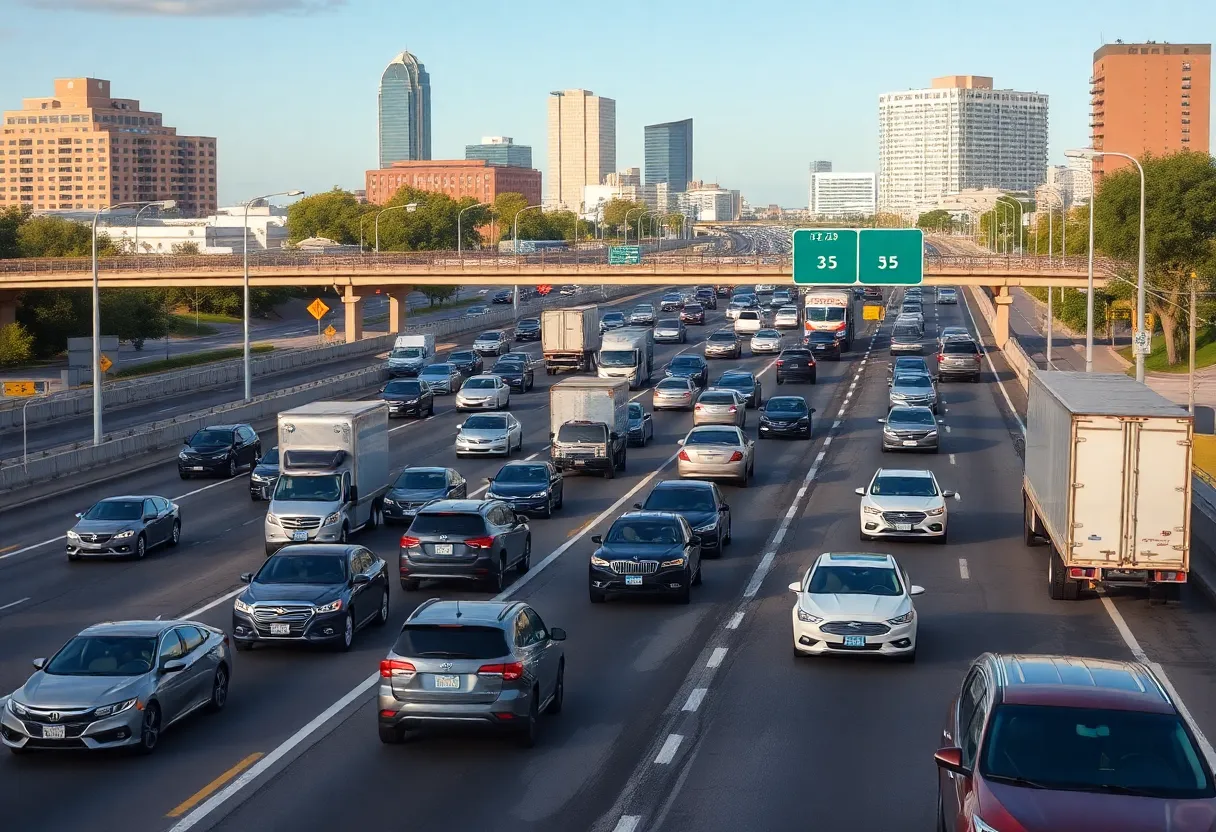
San Antonio’s I-35 corridor has been highlighted as one of the most congested roadways in Texas, with daily traffic delays resulting in over $31 million in annual congestion costs. This pressing issue affects both commuters and local businesses, emphasizing the need for infrastructure improvements and investment from local authorities. As the city continues to grow, addressing these traffic challenges becomes essential for maintaining economic vitality and quality of life.
San Antonio, Texas
San Antonio’s I-35 Corridor Among Texas’ Most Congested Roadways
Traffic congestion in San Antonio is becoming a pressing issue, with the I-35 corridor identified as one of the most congested roadways in Texas. Recent data from the Texas A&M Transportation Institute revealed that the segment of I-35 between I-37 and Highway 90 ranks 43rd among the state’s most congested stretches, resulting in staggering traffic delays that amount to 351,763 person-hours lost per mile each year. This congestion is not just an inconvenience; it translates to a congestion cost exceeding $31 million annually, affecting the productivity and quality of life for many residents.
As San Antonio continues to grow and evolve, the emergence of traffic challenges highlights the resilience and determination of local entrepreneurs. Small businesses often bear the brunt of traffic delays that hinder customer access and logistics. Advocates argue that reducing regulatory barriers and investing in infrastructure improvements could help alleviate congestion while fostering economic growth and innovation across Texas. A collaborative approach involving local businesses, government agencies, and citizens is essential in addressing this widening problem.
Top 10 Most Congested Road Segments in Texas
The Texas A&M Transportation Institute’s report elucidates which road segments experience the highest congestion levels across the state:
- West Loop Freeway (I-610) in Houston: From I-10 (Katy Freeway) to U.S. Highway 59 (Southwest Freeway), with an annual congestion cost of $166.3 million.
- Eastex Freeway (I-69/U.S. 59) in Houston: From SH 288 to I-10, experiencing significant traffic delays.
- Woodall Rodgers Freeway in Dallas: From U.S. 75 to North Beckley Avenue, adding substantial time to commutes.
- Southwest Freeway (I-69/U.S. 59) in Houston: From the West Loop to SH 288, with high congestion levels.
- North Loop Freeway (I-610) in Houston: From I-45 North to I-10 Katy, experiencing significant delays.
- I-10 Katy Freeway in Houston: From the West Loop to I-45, with high congestion levels.
- I-45 Gulf Freeway in Houston: From I-10 to the South Loop, experiencing significant delays.
- I-35W in Fort Worth: From SH 183 to I-30, adding substantial time to commutes.
- I-35 in Austin: From U.S. 290 to SH 71, with high congestion levels.
- I-10 in Houston: From I-45 to U.S. 59, experiencing significant delays.
Impact of Congestion on San Antonio
The congestion on the I-35 corridor not only frustrates daily commuters but also poses broader economic consequences for San Antonio. With an annual congestion cost surpassing $31 million, the time lost in traffic is a drain on productivity, directly affecting the economic vitality of the city. The effect transcends beyond individual commutes, impacting the movement of goods and services, thereby influencing local business operations and customer satisfaction.
Statewide Efforts to Address Congestion
In an effort to tackle traffic congestion, the Texas Department of Transportation (TxDOT) has initiated several strategies aimed at improving road safety and traffic flow. These include expanding roadway capacity, upgrading existing infrastructure, and implementing technology-driven traffic management systems. Despite these endeavors, the challenge remains formidable, as Texas is projected to see a population surge of nearly 20 million over the next 25 years. Without sustained attention to these issues, the state’s infrastructure may struggle to keep pace with its rapid growth.
Conclusion
San Antonio’s I-35 corridor represents a critical juncture in the city’s transportation network, and the ongoing congestion reflects larger trends impacting both local businesses and commuters. As TxDOT and local authorities work to alleviate these issues through infrastructure investments and community engagement, residents and stakeholders are encouraged to stay informed and involved. Supporting local businesses and advocating for necessary changes to improve transportation efficiency can play a significant role in fostering a resilient San Antonio economy.
FAQ
What is the most congested road segment in Texas?
The West Loop Freeway (I-610) in Houston, from I-10 (Katy Freeway) to U.S. Highway 59 (Southwest Freeway), is the most congested road segment in Texas, with an annual congestion cost of $166.3 million.
How does the congestion on San Antonio’s I-35 corridor impact commuters?
The congestion on San Antonio’s I-35 corridor leads to significant delays for commuters, with an annual congestion cost exceeding $31 million.
What measures are being taken to address traffic congestion in Texas?
The Texas Department of Transportation (TxDOT) has initiated several projects aimed at improving traffic flow and reducing delays, including expanding roadways, upgrading infrastructure, and implementing traffic management systems.
Key Features
| Feature | Description |
|---|---|
| Most Congested Road Segment in Texas | West Loop Freeway (I-610) in Houston, from I-10 (Katy Freeway) to U.S. Highway 59 (Southwest Freeway), with an annual congestion cost of $166.3 million. |
| San Antonio’s I-35 Corridor Ranking | Ranked 43rd among Texas’ most congested roadways, with an annual congestion cost exceeding $31 million. |
| Statewide Congestion Mitigation Efforts | TxDOT has initiated projects to expand roadways, upgrade infrastructure, and implement traffic management systems to alleviate congestion. |
Deeper Dive: News & Info About This Topic
HERE Resources
Vehicle Crash Causes Major Traffic Delays Near Downtown San Antonio
Major Traffic Disruption After Loop 410 Crash
Major Crash Causes Hour-Long Delay on I-10 Eastbound
I-35 Ranked Among Deadliest Highways in Texas
I-10 Construction in Seguin Raises Safety Concerns
Major Crash Causes Lane Closures and Delays on Loop 410
San Antonio Resumes Major Highway Closures Impacting Traffic
New Braunfels Receives Over $50 Million in Transportation Funding
Crash Closes Portion of Loop 1604 in San Antonio
Loop 1604 North Expansion Project to Reduce Commute Times

Author: STAFF HERE SAN ANTONIO WRITER
The SAN ANTONIO STAFF WRITER represents the experienced team at HERESanAntonio.com, your go-to source for actionable local news and information in San Antonio, Bexar County, and beyond. Specializing in "news you can use," we cover essential topics like product reviews for personal and business needs, local business directories, politics, real estate trends, neighborhood insights, and state news affecting the area—with deep expertise drawn from years of dedicated reporting and strong community input, including local press releases and business updates. We deliver top reporting on high-value events such as Fiesta San Antonio, San Antonio Stock Show & Rodeo, and Dia de los Muertos. Our coverage extends to key organizations like the Greater San Antonio Chamber of Commerce and United Way of San Antonio and Bexar County, plus leading businesses in retail, insurance, and energy that power the local economy such as H-E-B, USAA, and Valero Energy. As part of the broader HERE network, including HEREAustinTX.com, HERECollegeStation.com, HEREDallas.com, and HEREHouston.com, we provide comprehensive, credible insights into Texas's dynamic landscape.