

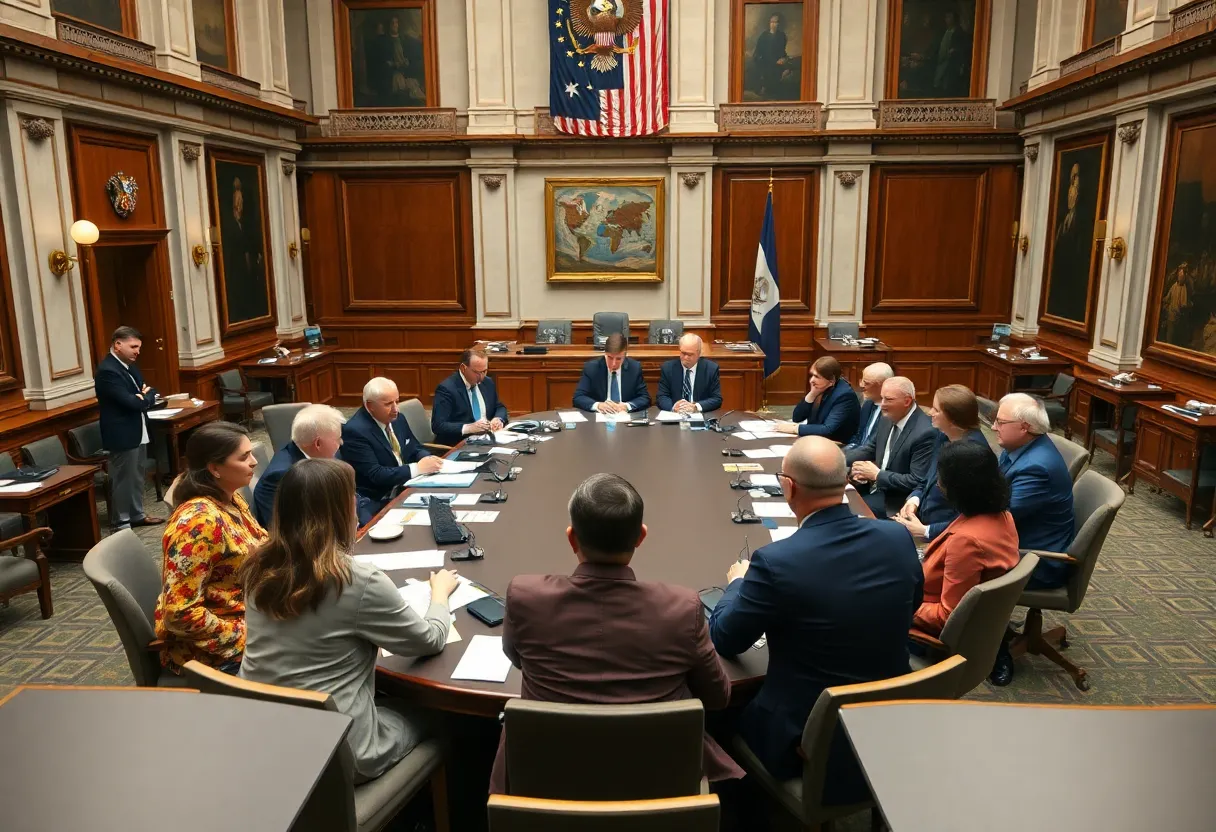
Baghdad, Iraq, December 22, 2025
Iraq’s political landscape faces significant uncertainty following the recent parliamentary elections, which did not yield a clear majority. The Reconstruction and Development Coalition leads negotiations but struggles to form a stable government due to challenges such as the boycott by influential factions and the rising power of militia groups. The situation is further complicated by external pressures and internal political dynamics among Sunni and Kurdish movements as Iraq navigates pressing economic and governance issues.
San Antonio, TX – Political Uncertainty Grips Iraq Amidst Coalition Negotiations
Baghdad, Iraq – Iraq’s political landscape remains uncertain following the November 2025 parliamentary elections, which failed to produce a decisive majority. Prime Minister Mohammed Shia al-Sudani’s Reconstruction and Development Coalition emerged as the largest bloc with 46 seats in the 329-member parliament. However, this outcome has led to complex negotiations among various factions to form a stable government.
Election Results and Coalition Dynamics
The Reconstruction and Development Coalition’s 46 seats place it at the forefront of government formation talks. Despite this, the coalition faces challenges in securing sufficient support to establish a majority government. The Coordination Framework, a significant political alliance, has also been actively involved in these negotiations, aiming to consolidate power and influence the direction of the new government.
Impact of Muqtada al-Sadr’s Boycott
The absence of the influential Sadrist movement, led by Shiite cleric Muqtada al-Sadr, who boycotted the elections, has significantly impacted the political process. This boycott has reduced voter turnout in key areas and allowed rival militias to gain a stronger foothold in the parliament. Armed groups allied with political factions secured over 100 seats—their strongest showing since 2003—highlighting the growing influence of militia groups in Iraq’s political sphere.
Sunni and Kurdish Political Movements
Sunni political forces have regrouped under the National Political Council, aiming to regain influence lost in previous elections. Kurdish parties continue to negotiate over the presidency, seeking to assert their position within the new government framework. These developments underscore the fragmented nature of Iraq’s political environment and the challenges in achieving consensus among diverse groups.
Challenges Ahead for the Incoming Government
The forthcoming government will inherit a range of pressing issues, including a fragile economy heavily reliant on oil revenues, rampant corruption, and the complex status of Iran-backed armed groups. The United States has urged Iraq to curb the influence of these militias and avoid appointing militia-linked individuals to government positions. This external pressure adds another layer of complexity to the already intricate political negotiations.
Background Context
The November 2025 parliamentary elections were a pivotal moment for Iraq, reflecting the evolving dynamics of its political landscape. The Reconstruction and Development Coalition’s emergence as the largest bloc signifies a shift in political alliances and priorities. However, the absence of the Sadrist movement and the rise of militia influence highlight the challenges in achieving political stability and governance in Iraq.
Frequently Asked Questions (FAQ)
What were the results of the November 2025 parliamentary elections in Iraq?
The Reconstruction and Development Coalition emerged as the largest bloc with 46 seats in the 329-member parliament. However, this outcome has led to complex negotiations among various factions to form a stable government.
How has Muqtada al-Sadr’s boycott affected Iraq’s political process?
The absence of the influential Sadrist movement, led by Shiite cleric Muqtada al-Sadr, who boycotted the elections, has significantly impacted the political process. This boycott has reduced voter turnout in key areas and allowed rival militias to gain a stronger foothold in the parliament. Armed groups allied with political factions secured over 100 seats—their strongest showing since 2003—highlighting the growing influence of militia groups in Iraq’s political sphere.
What challenges does the incoming Iraqi government face?
The forthcoming government will inherit a range of pressing issues, including a fragile economy heavily reliant on oil revenues, rampant corruption, and the complex status of Iran-backed armed groups. The United States has urged Iraq to curb the influence of these militias and avoid appointing militia-linked individuals to government positions. This external pressure adds another layer of complexity to the already intricate political negotiations.
Key Features of Iraq’s Political Situation
| Feature | Description |
|---|---|
| Election Outcome | The Reconstruction and Development Coalition secured 46 seats, leading the parliament but lacking a majority. |
| Sadrist Movement’s Boycott | Muqtada al-Sadr’s boycott reduced voter turnout and increased militia influence in parliament. |
| Sunni and Kurdish Movements | Sunni forces regrouped under the National Political Council; Kurdish parties continue presidential negotiations. |
| External Pressures | The U.S. urges Iraq to limit militia influence and avoid appointing militia-linked individuals to government positions. |
Deeper Dive: News & Info About This Topic
HERE Resources
U.S. Air Force to Honor Ashli Babbitt with Military Funeral
US Stocks Rise as Oil Prices Drop Sharply
Israel Launches Major Offensive Against Iran
Federal Judge Halts Deportation of Badar Khan Suri

Author: STAFF HERE SAN ANTONIO WRITER
The SAN ANTONIO STAFF WRITER represents the experienced team at HERESanAntonio.com, your go-to source for actionable local news and information in San Antonio, Bexar County, and beyond. Specializing in "news you can use," we cover essential topics like product reviews for personal and business needs, local business directories, politics, real estate trends, neighborhood insights, and state news affecting the area—with deep expertise drawn from years of dedicated reporting and strong community input, including local press releases and business updates. We deliver top reporting on high-value events such as Fiesta San Antonio, San Antonio Stock Show & Rodeo, and Dia de los Muertos. Our coverage extends to key organizations like the Greater San Antonio Chamber of Commerce and United Way of San Antonio and Bexar County, plus leading businesses in retail, insurance, and energy that power the local economy such as H-E-B, USAA, and Valero Energy. As part of the broader HERE network, including HEREAustinTX.com, HERECollegeStation.com, HEREDallas.com, and HEREHouston.com, we provide comprehensive, credible insights into Texas's dynamic landscape.