

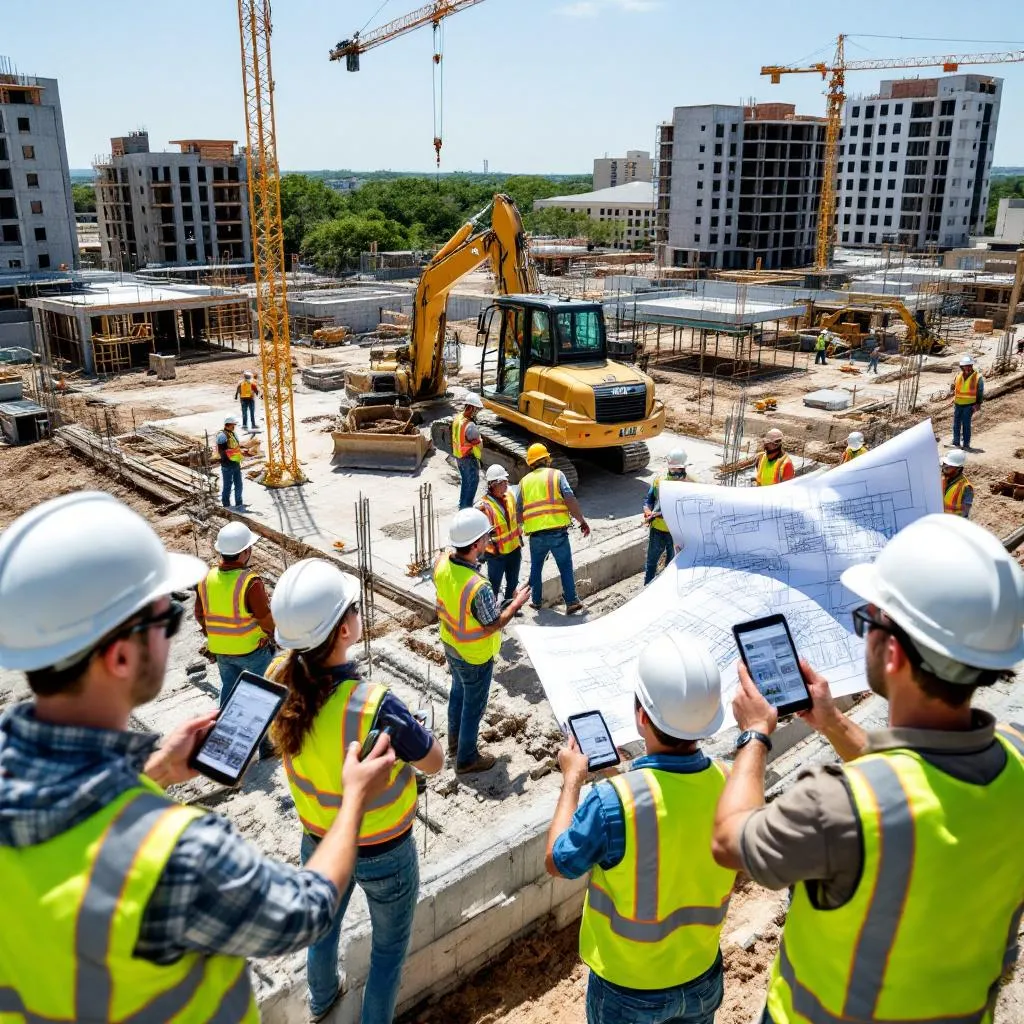
Mobile Construction ERP Systems: Transforming San Antonio’s Building Industry Through Real-Time Connectivity
In the rapidly expanding San Antonio construction market, where projects span from downtown high-rises to suburban developments across Bexar County’s 1,256 square miles, mobile connectivity has become the cornerstone of successful project management. Construction ERP systems with robust mobile capabilities are no longer luxury solutions—they’re essential tools for survival in an increasingly competitive landscape.
The San Antonio Construction Landscape: A Mobile-First Imperative
San Antonio’s construction industry faces unique challenges that make mobile ERP systems particularly crucial. The city’s explosive growth, with over 2.5 million residents in the metropolitan area and construction activity spread across vast geographical distances, creates operational complexities that traditional office-bound systems simply cannot address.
San Antonio Construction Market Snapshot
$4.2 billion in annual construction volume
78% of projects located more than 15 miles from downtown
45% average increase in project coordination time without mobile systems
The region’s construction projects often span from the urban core to outlying areas like Stone Oak, Alamo Ranch, and beyond into Comal and Guadalupe counties. This geographical spread creates communication gaps that mobile ERP systems are uniquely positioned to bridge. Unlike traditional desktop-based project management tools, mobile Construction ERP systems enable real-time data flow between job sites and headquarters, regardless of location.
Weather Resilience and Operational Continuity
South Texas weather patterns present additional challenges that make mobile ERP systems indispensable. The region experiences severe thunderstorms, occasional flooding, and extreme heat that can disrupt traditional communication channels. Mobile ERP systems with offline capabilities and cloud-based synchronization ensure project continuity even when weather conditions impact connectivity.
Core Mobile ERP Functionalities Transforming San Antonio Construction Operations
Real-Time Project Visibility Across Dispersed Sites
San Antonio’s construction landscape includes everything from downtown mixed-use developments to residential communities in far-flung suburbs like Schertz and Cibolo. Mobile ERP systems provide project managers with unprecedented visibility into operations across these dispersed locations. Real-time dashboards accessible via smartphones and tablets deliver instant updates on project progress, resource utilization, and potential bottlenecks.
Advanced mobile ERP platforms integrate GPS tracking with project data, allowing managers to visualize exactly where resources are deployed across the San Antonio metropolitan area. This geographical awareness is particularly valuable for firms managing multiple concurrent projects, enabling optimal resource allocation and reducing travel time between sites.
Field-to-Office Integration: Eliminating Information Silos
Traditional construction workflows often create information silos, with field data trapped in paper forms or isolated systems until manually transferred to office systems. Mobile ERP solutions eliminate these silos by enabling direct data entry from job sites into centralized databases. Field personnel can update project status, record material usage, log safety incidents, and capture quality control checkpoints directly through mobile interfaces.
This integration is particularly powerful in San Antonio’s diverse construction environment, where projects might involve specialized trades scattered across the region. A plumbing contractor working on a new development in Helotes can instantly update progress reports that automatically trigger next-phase scheduling for electrical contractors based in New Braunfels.
Advanced Integration Capabilities
Leading mobile ERP systems offer sophisticated integration features specifically valuable for San Antonio construction firms:
- Municipal System Integration: Direct connections to San Antonio Development Services Department for permit tracking and inspection scheduling
- Weather Service Integration: Automated weather alerts and schedule adjustments based on National Weather Service forecasts for South Texas
- Traffic Pattern Analysis: Integration with regional traffic data to optimize material delivery and crew deployment schedules
- Utility Coordination: Direct interfaces with CPS Energy and SAWS systems for utility coordination and service planning
Mobile Workforce Management in San Antonio’s Bilingual Environment
San Antonio’s construction workforce is notably diverse, with approximately 65% of workers being bilingual Spanish-English speakers. Modern mobile ERP systems address this demographic reality through sophisticated multilingual interfaces and communication tools. Voice-to-text capabilities in both English and Spanish enable workers to create detailed progress reports without language barriers, while visual workflow guides use iconography and images to transcend linguistic differences.
Advanced mobile platforms also incorporate cultural workflow preferences common in San Antonio’s construction industry. For example, many local firms operate with extended family networks and informal communication patterns. Mobile ERP systems accommodate these preferences through flexible user hierarchies and customizable notification systems that respect traditional communication flows while maintaining professional project documentation.
Compliance and Safety Management Through Mobile Platforms
Texas construction regulations, combined with local San Antonio building codes, create complex compliance requirements that mobile ERP systems help navigate efficiently. These platforms maintain up-to-date regulatory databases and provide automated compliance checking for permit requirements, safety protocols, and environmental regulations specific to Bexar County and surrounding areas.
Mobile safety management modules are particularly valuable in San Antonio’s climate, where heat-related incidents are a significant concern. Systems can track worker exposure times, mandate cooling breaks based on temperature and humidity readings, and automatically generate safety reports required by local regulatory bodies.
Advanced Mobile Features Driving San Antonio Construction Innovation
Augmented Reality and 3D Visualization
Cutting-edge mobile ERP systems now incorporate augmented reality (AR) features that overlay project information onto real-world job site views. This technology is particularly valuable for San Antonio’s complex urban construction projects, where space constraints and existing infrastructure create challenging installation environments. Field workers can use AR-enabled mobile devices to visualize utility placements, structural modifications, and design specifications without carrying bulky blueprint sets.
3D model integration through mobile platforms allows on-site teams to access detailed building information models (BIM) directly from smartphones and tablets. This capability has proven especially valuable for San Antonio’s mixed-use developments and renovation projects, where existing structure details must be constantly referenced during construction activities.
Predictive Analytics and Machine Learning Integration
Advanced mobile ERP systems leverage machine learning algorithms to analyze historical project data and predict potential issues before they occur. For San Antonio construction firms, this capability is invaluable for managing seasonal variations, weather-related delays, and resource constraints common to South Texas construction cycles.
IoT Integration and Smart Site Monitoring
Internet of Things (IoT) devices integrated with mobile ERP systems provide continuous monitoring of job site conditions, equipment performance, and material usage. In San Antonio’s extreme heat conditions, IoT sensors can automatically trigger cooling protocols and adjust work schedules based on real-time temperature and humidity readings. Equipment monitoring prevents costly breakdowns and optimizes maintenance scheduling across multiple job sites throughout the metropolitan area.
Implementation Strategies for San Antonio Construction Firms
Phased Rollout Approaches
Successful mobile ERP implementation in San Antonio’s construction environment typically follows a structured phased approach that accounts for the diverse skill levels and technological comfort zones of regional workforce demographics. The most effective strategy begins with pilot programs on single projects, allowing teams to develop familiarity with mobile interfaces while maintaining existing workflow backup systems.
Phase one typically focuses on basic data collection and reporting functions, enabling field crews to become comfortable with mobile data entry without overwhelming them with complex features. Phase two introduces real-time communication and scheduling tools, while phase three implements advanced features like predictive analytics and AR visualization.
Infrastructure Considerations for Rural Job Sites
San Antonio metropolitan construction projects often extend into areas with limited cellular coverage, particularly in rapidly developing zones like far northeast Bexar County and western Comal County. Mobile ERP systems must incorporate robust offline capabilities and intelligent synchronization protocols to function effectively in these environments.
Leading systems employ local caching strategies that store critical project data on mobile devices, enabling continued operation even when connectivity is intermittent. Advanced synchronization algorithms prioritize data uploads based on business importance, ensuring that critical safety reports and progress updates reach headquarters systems even with limited bandwidth.
Cost-Benefit Analysis: Mobile ERP Investment Returns
Quantifiable ROI Metrics for San Antonio Firms
San Antonio construction firms implementing comprehensive mobile ERP systems typically achieve measurable returns on investment within 12-18 months. The primary cost savings derive from reduced administrative overhead, improved project scheduling efficiency, and decreased rework due to better communication and documentation.
Average ROI Breakdown for San Antonio Construction Firms
18% reduction in administrative costs
22% improvement in project completion times
15% decrease in material waste
31% reduction in change order frequency
These improvements are particularly pronounced for firms managing multiple concurrent projects across the San Antonio metropolitan area. The ability to optimize resource allocation and reduce travel time between job sites creates compounding efficiency gains that continue to increase over time.
Hidden Cost Savings and Efficiency Gains
Beyond obvious operational improvements, mobile ERP systems generate less apparent but equally significant cost savings. Improved documentation and compliance tracking reduce legal exposure and insurance costs. Enhanced safety monitoring and incident reporting help qualify firms for lower worker compensation insurance rates, while better resource utilization extends equipment lifecycles and reduces replacement costs.
Real-time project visibility also improves client relationships and can lead to increased repeat business and referrals. San Antonio’s construction market relies heavily on relationship-based business development, making client satisfaction improvements particularly valuable for long-term growth.
Mobile ERP Capability Comparison for San Antonio Construction Operations
| Feature Category | Basic Mobile ERP | Advanced Mobile ERP | Enterprise Mobile ERP | San Antonio Relevance |
|---|---|---|---|---|
| Offline Functionality | Limited | Full Offline Mode | Smart Sync | Essential for rural job sites |
| Multilingual Support | English Only | Spanish Interface | Voice Translation | Critical for local workforce |
| Weather Integration | None | Alerts | Auto-Scheduling | Vital for South Texas weather |
| Municipal Integration | Manual Entry | Limited APIs | Full Integration | Required for permit tracking |
| GPS Asset Tracking | Basic Location | Real-time Tracking | Predictive Routing | Essential for dispersed sites |
| Heat Safety Monitoring | None | Manual Logs | Automated Alerts | Mandatory for Texas climate |
| AR/BIM Integration | None | 2D Plans | Full AR Support | Valuable for complex projects |
| IoT Device Integration | None | Basic Sensors | Full IoT Platform | Emerging requirement |
| Predictive Analytics | Basic Reporting | Trend Analysis | AI-Powered Insights | Competitive advantage |
| Compliance Automation | Manual Tracking | Automated Alerts | Full Compliance Suite | Essential for regulatory adherence |
Security and Data Protection in Mobile Construction ERP
Cybersecurity Considerations for Construction Data
Construction firms in San Antonio handle sensitive project data, client information, and proprietary designs that require robust security protection. Mobile ERP systems must implement enterprise-grade security measures including end-to-end encryption, multi-factor authentication, and secure cloud storage protocols. The distributed nature of construction operations, with workers accessing systems from various locations and networks, creates unique security challenges that specialized construction ERP platforms are designed to address.
Advanced mobile ERP systems employ zero-trust security models that verify every user and device before granting access to project data. This approach is particularly important for San Antonio firms working on government contracts or commercial projects with strict confidentiality requirements. Biometric authentication options, including fingerprint and facial recognition, provide convenient yet secure access methods suitable for job site environments.
Data Backup and Disaster Recovery
South Texas weather patterns, including severe storms and occasional flooding, make robust data backup and disaster recovery capabilities essential for construction firms. Leading mobile ERP systems maintain multiple geographically distributed backup locations and provide rapid disaster recovery protocols that can restore full system functionality within hours of an outage.
Integration with Local San Antonio Business Ecosystem
Supplier and Vendor Network Integration
San Antonio’s construction industry relies on established networks of local suppliers, subcontractors, and service providers. Modern mobile ERP systems facilitate these relationships through integrated supplier portals that enable real-time communication, automated purchase order processing, and collaborative scheduling. Local suppliers like White Cap Construction Supply and regional concrete providers increasingly offer direct ERP integration capabilities that streamline material ordering and delivery coordination.
Advanced systems also provide vendor performance analytics that help firms optimize their supplier relationships based on delivery reliability, quality metrics, and pricing consistency. This data-driven approach to supplier management is particularly valuable in San Antonio’s competitive construction market, where material costs and availability can significantly impact project profitability.
Financial Institution and Banking Integration
Construction projects require complex financial management, including progress billing, lien management, and cash flow optimization. Mobile ERP systems with integrated banking capabilities enable real-time financial oversight and automated payment processing. Integration with local financial institutions familiar with construction industry requirements, such as Frost Bank and regional credit unions, provides additional advantages for project financing and cash management.
Advanced financial modules within mobile ERP systems provide real-time project profitability analysis, enabling project managers to make informed decisions about resource allocation and change order pricing while still on job sites. This capability is particularly valuable for San Antonio firms managing multiple concurrent projects with varying profit margins and cash flow requirements.
Training and Change Management for Mobile ERP Adoption
Workforce Development Strategies
Successful mobile ERP implementation requires comprehensive training programs that address the diverse skill levels and technological comfort zones within San Antonio’s construction workforce. Effective training strategies employ multiple learning modalities, including hands-on workshops, video tutorials in both English and Spanish, and peer mentoring programs that leverage experienced users to support new adopters.
Training programs should account for the practical realities of construction work schedules, with flexible timing that accommodates early morning starts and weather-related schedule changes common in South Texas. Mobile-friendly training modules that can be accessed during weather delays or between tasks help maximize training effectiveness while minimizing disruption to project schedules.
Cultural Change Management
Construction industry culture often emphasizes traditional workflows and face-to-face communication. Successful mobile ERP adoption requires change management strategies that respect these cultural preferences while demonstrating the practical benefits of digital tools. Highlighting how mobile systems enhance rather than replace personal relationships and communication patterns helps overcome resistance to technological change.
Champions programs that identify and develop internal advocates for mobile ERP systems prove particularly effective in San Antonio’s relationship-driven construction environment. These champions serve as peer educators and troubleshooters, providing culturally appropriate support for system adoption throughout the organization.
FAQs
What is the ROI timeline for implementing a mobile Construction ERP system in San Antonio?
Most San Antonio construction firms see initial ROI within 6-12 months through reduced administrative costs and improved project efficiency. Full ROI typically occurs within 18-24 months, with annual savings of 15-25% on operational costs. Factors affecting ROI timeline include firm size, project complexity, and implementation thoroughness. Larger firms with multiple concurrent projects typically achieve faster returns due to greater efficiency gains from centralized coordination.
How does mobile ERP handle San Antonio’s extreme weather conditions?
Modern mobile ERP systems feature offline synchronization capabilities, ruggedized device compatibility, and cloud-based backup systems that ensure data integrity during severe weather events common in South Texas. Advanced systems automatically sync data when connectivity is restored and provide weather integration features that can automatically adjust work schedules based on National Weather Service forecasts. Some systems also include heat stress monitoring and automated cooling break reminders for worker safety during extreme temperature conditions.
What cellular coverage requirements are needed for mobile ERP in rural areas around San Antonio?
Most mobile ERP systems require only 3G connectivity for basic functions, with offline modes available for areas with poor coverage. Systems automatically sync when connectivity is restored. Advanced platforms prioritize critical data transmission (safety reports, emergency communications) over routine updates when bandwidth is limited. Many systems also support satellite internet backup connections for completely remote locations common in expanding development areas around San Antonio.
How do mobile ERP systems integrate with existing San Antonio municipal permitting systems?
Leading mobile ERP systems offer API integrations with local government systems, including San Antonio’s development services portal, enabling automated permit tracking and compliance reporting. These integrations can automatically update permit status, schedule inspections, and track compliance requirements. Some advanced systems also integrate with utility providers like CPS Energy and SAWS for service coordination and utility connection scheduling.
What training is required for field crews to adopt mobile ERP systems?
Most systems require 2-4 hours of initial training for field personnel, with ongoing support. User-friendly interfaces designed for construction workers minimize the learning curve. Effective training programs include hands-on practice sessions, multilingual materials, and peer mentoring. Advanced systems offer in-app tutorials and context-sensitive help that provides guidance as workers learn new features. Follow-up training sessions after 30 and 90 days help ensure long-term adoption success.
How do mobile ERP systems handle bilingual workforce needs common in San Antonio?
Modern mobile ERP platforms offer multi-language support, including Spanish interfaces, voice-to-text capabilities in multiple languages, and visual workflow guides that transcend language barriers. Advanced systems include real-time translation features for communications between English and Spanish speakers, culturally appropriate user interface designs, and multilingual reporting capabilities. Some platforms also offer audio instructions and voice navigation in both languages for hands-free operation in noisy construction environments.
What security measures protect sensitive project data in mobile ERP systems?
Enterprise-grade mobile ERP systems employ end-to-end encryption, multi-factor authentication, biometric security options, and zero-trust network architectures. Data is typically stored in geographically distributed cloud facilities with automatic backup and disaster recovery capabilities. Advanced systems also provide audit trails, role-based access controls, and remote device management capabilities that allow IT administrators to secure or wipe devices if they are lost or stolen. Compliance with industry standards like SOC 2 and ISO 27001 ensures robust security protocols.
How do mobile ERP systems handle equipment tracking across multiple San Antonio job sites?
Advanced mobile ERP platforms integrate GPS tracking, RFID technology, and IoT sensors to provide real-time equipment location and utilization monitoring. Systems can track equipment movement between job sites, schedule maintenance based on usage hours, and provide theft protection through geofencing alerts. Predictive analytics help optimize equipment allocation across projects and identify underutilized assets that can be reassigned to improve overall productivity.
Future Trends in Mobile Construction ERP Technology
Artificial Intelligence and Automation
The next generation of mobile construction ERP systems will incorporate increasingly sophisticated artificial intelligence capabilities that automate routine decision-making and provide predictive insights. AI-powered systems will analyze historical project data to automatically optimize scheduling, predict material requirements, and identify potential quality issues before they occur. For San Antonio construction firms, these capabilities will be particularly valuable for managing seasonal variations and weather-related disruptions common to South Texas construction cycles.
Machine learning algorithms will continuously improve system performance by analyzing user behavior patterns and project outcomes. This adaptive capability will enable mobile ERP systems to provide increasingly personalized and contextually relevant recommendations for project management decisions, resource allocation, and risk mitigation strategies.
5G Connectivity and Enhanced Real-Time Capabilities
The deployment of 5G cellular networks throughout the San Antonio metropolitan area will dramatically enhance mobile ERP capabilities by providing ultra-low latency connectivity and massive bandwidth increases. This improved connectivity will enable real-time video streaming for remote inspections, augmented reality applications with complex 3D modeling, and instantaneous data synchronization across all project stakeholders.
Enhanced connectivity will also enable new collaborative capabilities, including real-time multi-user design sessions, remote expert consultation during complex installations, and immersive virtual reality training programs that can be accessed directly from job sites.
The convergence of mobile ERP systems with emerging technologies like artificial intelligence, 5G connectivity, and advanced IoT integration represents a fundamental shift in how San Antonio construction firms will manage projects and coordinate operations. Companies that begin implementing these technologies today will be well-positioned to capitalize on the competitive advantages that next-generation mobile ERP platforms will provide.
As San Antonio continues its rapid growth and development, construction firms that embrace mobile ERP technology will find themselves better equipped to manage the increasingly complex projects and dispersed operations that characterize the region’s dynamic construction landscape. The investment in mobile ERP capabilities represents not just an operational improvement, but a strategic positioning for long-term success in one of Texas’s most promising construction markets.

Author: STAFF HERE SAN ANTONIO WRITER
The SAN ANTONIO STAFF WRITER represents the experienced team at HERESanAntonio.com, your go-to source for actionable local news and information in San Antonio, Bexar County, and beyond. Specializing in "news you can use," we cover essential topics like product reviews for personal and business needs, local business directories, politics, real estate trends, neighborhood insights, and state news affecting the area—with deep expertise drawn from years of dedicated reporting and strong community input, including local press releases and business updates. We deliver top reporting on high-value events such as Fiesta San Antonio, San Antonio Stock Show & Rodeo, and Dia de los Muertos. Our coverage extends to key organizations like the Greater San Antonio Chamber of Commerce and United Way of San Antonio and Bexar County, plus leading businesses in retail, insurance, and energy that power the local economy such as H-E-B, USAA, and Valero Energy. As part of the broader HERE network, including HEREAustinTX.com, HERECollegeStation.com, HEREDallas.com, and HEREHouston.com, we provide comprehensive, credible insights into Texas's dynamic landscape.