

Austin, August 24, 2025
News Summary
Texas Governor Greg Abbott has proclaimed victory as the state legislature has approved new congressional maps that are expected to shift five districts toward Republican candidates. The maps, enacted through House Bill 4, face criticism from Democrats who allege racial discrimination and plan to challenge the new boundaries in federal court. The approval signifies a significant partisan shift in Texas ahead of upcoming elections, amidst a larger national discourse on redistricting.
Austin
Governor Greg Abbott Declares Victory as Legislature Approves New Congressional Maps
The Texas Legislature has approved new congressional maps designed to increase Republican representation in Congress, with state leaders saying the changes will shift five seats toward the GOP. The plan, described by supporters as The One Big Beautiful Map, cleared the final legislative hurdle in the state Senate in the early hours of Saturday and is expected to be signed by the governor immediately after arrival at his desk.
What passed and what it would change
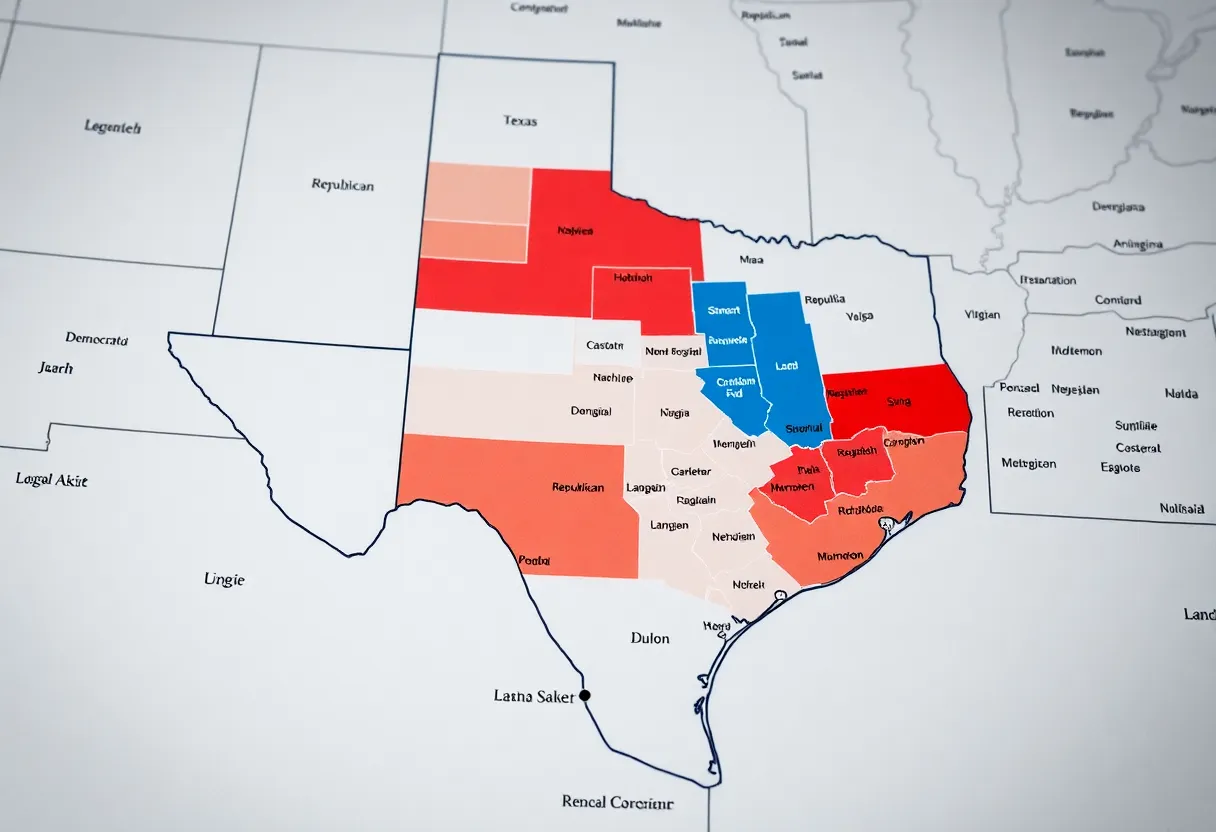
The redistricting plan, passed as House Bill 4, aims to reconfigure congressional boundaries so that five districts that previously leaned Democratic would become more favorable to Republican candidates. Specifically, the plan removes one Democratic-leaning district each in North Texas, Houston, and the Austin–San Antonio area, and makes shifts in South Texas that push two Democratic seats to the right. Legislative leaders and the governor contend the changes will strengthen the Republican congressional majority in future elections.
Legislative fight and tactics
The approval followed a protracted and contentious process. Democratic lawmakers delayed the plan for weeks, at one point fleeing the state for 15 days to deny the legislature a quorum. Some Democrats faced fines exceeding $9,000 for participating in that walkout. More than 250 witnesses formally opposed the new maps during legislative hearings, but critics note hearings took place without public access to the final map details. Democratic senators attempted filibusters and other procedural delays, and legislative leaders moved to shut down those efforts in order to complete the vote.
Political context and reactions
Republican leaders, including the state’s lieutenant governor, played central roles in steering the maps through the legislature. National political figures welcomed the maps as a potential boost for Republican congressional gains, with estimates from allies projecting an increase in GOP-held seats in upcoming cycles. Democrats denounced the maps as racially discriminatory and illegal and have pledged immediate legal challenges in federal court, calling the process a form of political gerrymandering that undermines voter intent.
Immediate next steps and likely legal fight
Governor Abbott has indicated he will sign the legislation as soon as the bill lands on his desk, which legislative officials anticipated would occur early next week. Democratic leaders have already signaled plans to file federal lawsuits arguing the maps violate constitutional protections and federal voting rights laws. Court challenges are expected to focus on allegations of racial discrimination in district composition and claims that the maps were enacted through a process that limited public input and transparency.
Process criticisms and public testimony
Critics of the passage point to limited public scrutiny of the version of the map that was ultimately approved. Legislative hearings received substantial opposition in testimony, but opponents say the public did not have meaningful access to the finalized digital map while hearings were held. Supporters counter that the maps were the result of legislative authority to set congressional boundaries.
Broader national context
Texas’s approval of new congressional boundaries comes amid a nationwide dispute over redistricting ahead of major election cycles. The move follows recent redistricting activity in other large states, where both parties have pursued changes they say will better reflect political and demographic shifts. In California, separate state-level efforts seek to alter congressional boundaries in order to gain seats, with some proposals requiring voter approval in a fall election.
Background: why this matters
Redistricting determines which voters are grouped together for congressional representation and can shape election outcomes for a decade. Mid-decade redistricting—changes made between the regular 10-year census cycle—are relatively unusual and typically draw heightened scrutiny. Officials in Texas initiated a mid-decade process this summer amid pressure from national party allies seeking to solidify control for upcoming midterm cycles.
Frequently Asked Questions
What did the new Texas congressional maps do?
The new maps reconfigure congressional districts in Texas to make five districts more favorable to Republican candidates, eliminating one Democratic-leaning district each in North Texas, Houston, and the Austin–San Antonio area, and shifting two South Texas districts to the right.
How were the maps approved?
House Bill 4 passed the Texas Senate in the early hours of Saturday after extended legislative debate. The governor has pledged to sign the bill once it reaches his desk.
What tactics did Democrats use to delay the maps?
Democratic lawmakers fled the state for 15 days to block a quorum and used filibusters and other procedural measures to delay the vote. Some participating Democrats have been fined for the walkout.
Will there be legal challenges?
Yes. Democratic officials have announced plans to challenge the maps in federal court, alleging racial discrimination and illegal gerrymandering and arguing that the approval process lacked transparency and adequate public input.
How does this fit into national redistricting efforts?
Texas’s plan is part of broader national disputes over redistricting. Other states, including California, are also pursuing changes aimed at altering congressional representation, and some proposals require voter referendums to take effect.
Key Features of the New Texas Congressional Maps
| Feature | Details |
|---|---|
| Bill | House Bill 4 |
| Projected seat shift | Five districts expected to move from Democratic-leaning to Republican-leaning |
| Regions affected | North Texas, Houston, Austin–San Antonio area, South Texas (two seats) |
| Public testimony | More than 250 witnesses opposed during hearings; limited public access to final map |
| Legislative tactics | Democratic walkout (15 days), filibusters; procedural moves to end delays |
| Legal status | Subject to expected federal court challenges alleging racial discrimination and gerrymandering |
Timeline of Key Events
| Date / Time | Event | Status / Source |
|---|---|---|
| Summer (year reported) | Governor launches mid-decade redistricting effort under political pressure | Legislative initiative |
| During legislative session | Democratic lawmakers flee state for 15 days to block quorum | Delaying tactic; some members fined |
| Legislative hearings (prior to final vote) | More than 250 witnesses oppose maps; final map not publicly accessible during hearings | Public testimony recorded |
| Early hours of Saturday (report) | House Bill 4 passes the Texas Senate | Bill approved; sent to governor |
| Shortly after passage | Governor pledges to sign the bill as soon as it arrives | Executive action pending |
| Immediately following passage | Democrats announce plans for federal court challenges | Legal action pending |
Visual Statistics
Deeper Dive: News & Info About This Topic
HERE Resources
Head for the Cure 5K Races for Brain Cancer Awareness
Texas Republicans Push Through New Redistricting Maps Amid Controversy
Minority Voting Groups Challenge Texas Redistricting
California Republicans Challenge New Redistricting Plan
Texas House Set to Vote on Congressional Redistricting
Texas Democrats Make a Dramatic Return to the Capitol
Texas Democrats Defy GOP in Ongoing Standoff
Texas Republicans Propose Controversial Congressional Map
Texas Republicans Pursue Fleeing Democrats Amid Redistricting Crisis
Texas Democrats Flee to Block Redistricting Vote
Additional Resources
- New York Times
- Wikipedia: Redistricting
- CNN
- Google Search: Texas Redistricting
- BBC News
- Google Scholar: Gerrymandering
- Dallas News
- Encyclopedia Britannica: Texas Redistricting
- Politico
- Google News: Texas Redistricting


Author: STAFF HERE SAN ANTONIO WRITER
The SAN ANTONIO STAFF WRITER represents the experienced team at HERESanAntonio.com, your go-to source for actionable local news and information in San Antonio, Bexar County, and beyond. Specializing in "news you can use," we cover essential topics like product reviews for personal and business needs, local business directories, politics, real estate trends, neighborhood insights, and state news affecting the area—with deep expertise drawn from years of dedicated reporting and strong community input, including local press releases and business updates. We deliver top reporting on high-value events such as Fiesta San Antonio, San Antonio Stock Show & Rodeo, and Dia de los Muertos. Our coverage extends to key organizations like the Greater San Antonio Chamber of Commerce and United Way of San Antonio and Bexar County, plus leading businesses in retail, insurance, and energy that power the local economy such as H-E-B, USAA, and Valero Energy. As part of the broader HERE network, including HEREAustinTX.com, HERECollegeStation.com, HEREDallas.com, and HEREHouston.com, we provide comprehensive, credible insights into Texas's dynamic landscape.